
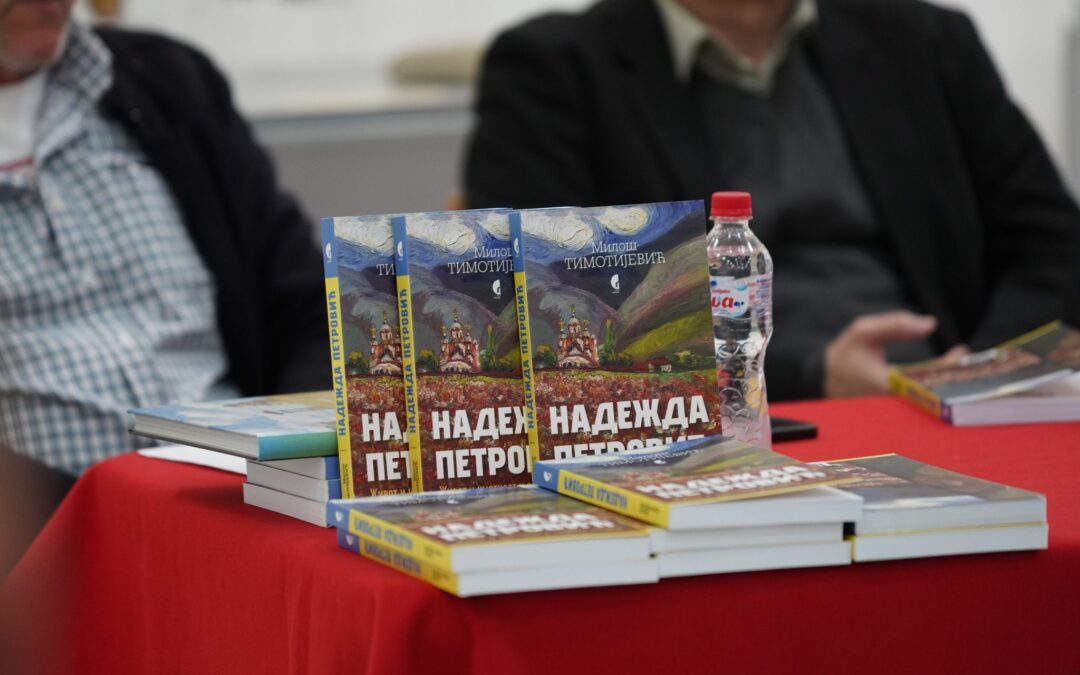
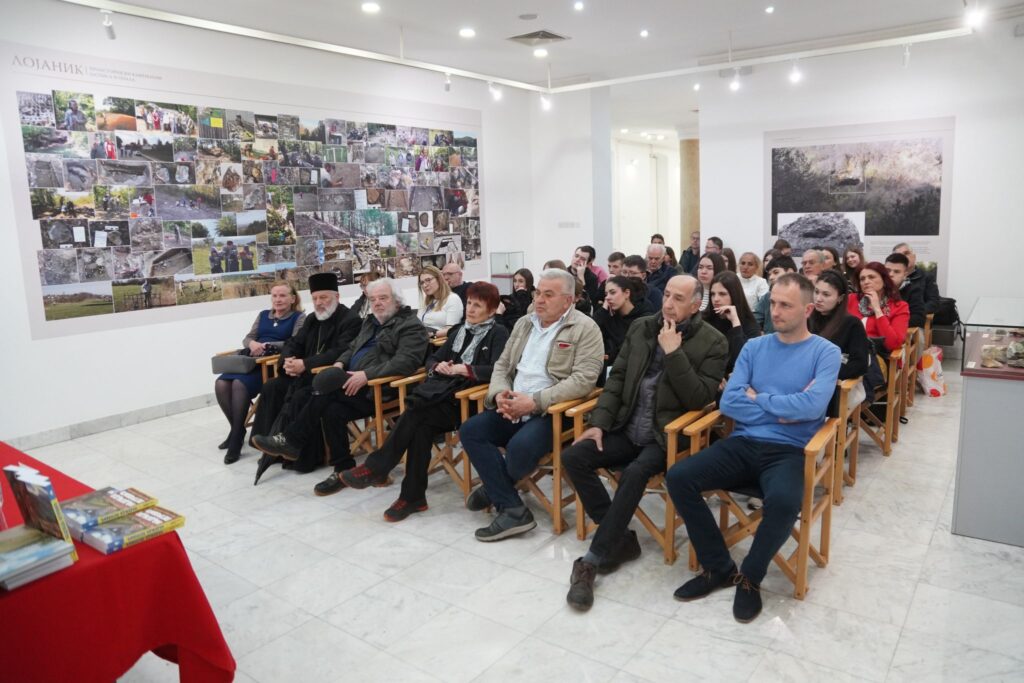
The promotion of the monograph by Miloš Timotijević “Nadežda Petrović: Life and Art in the Service of the Nation” was held at the Gallery of the National Museum Kraljevo, on Tuesday, March 17th, 2026, starting at 6 p.m. Suzana Novčić, museum advisor of the National Museum Kraljevo, welcomed the audience and introduced the participants of the promotion. She emphasized that the book was published in the “Sabornik” edition of the Official Gazette, dedicated to important figures and topics from Serbian history and culture, and that besides the author, the editor of the edition, Borisav Čeliković, was also present.
Speaking about the author, Suzana Novčić reminded that he is a distinguished historian and museum advisor of the National Museum in Čačak, whose work is widely recognized through numerous publications, exhibitions, and public lectures. She stressed that Timotijević, through his research, brings new interpretations of historical phenomena, overcoming established and simplified views of the past. She placed special emphasis on his research approach, which involves viewing historical figures and events in a broader social and cultural context. According to her, such a method enables deeper understanding of the past and often questions entrenched opinions.
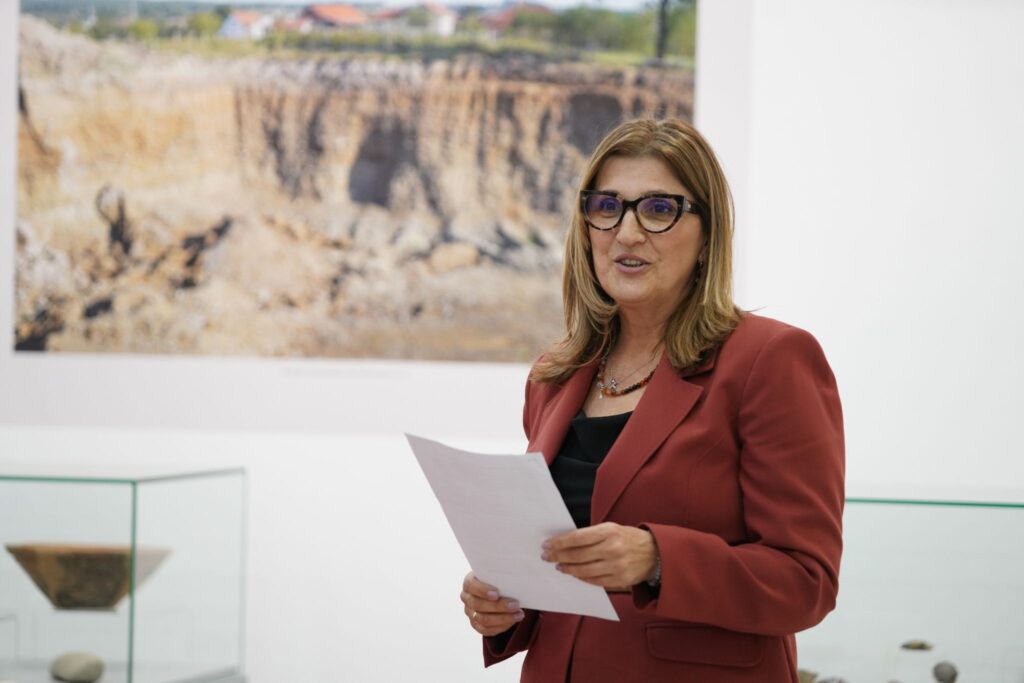
Speaking about the book itself, Suzana Novčić assessed that the author offers a new perspective on the life and work of Nadežda Petrović, despite the fact that much has already been written about her. She emphasized that Timotijević does not view the artist only through her painting, but also through historical circumstances, social engagement, and personal biography. According to her, the book presents Nadežda Petrović as a complex, multilayered personality – as an educated artist of European format, a nurse in wars, a representative of the avant‑garde, and an active participant in shaping the national idea. Novčić concluded that precisely such a comprehensive approach enables better understanding of her creativity, which goes beyond mere artistic value and reflects deep historical experiences and social circumstances of the time in which she lived.
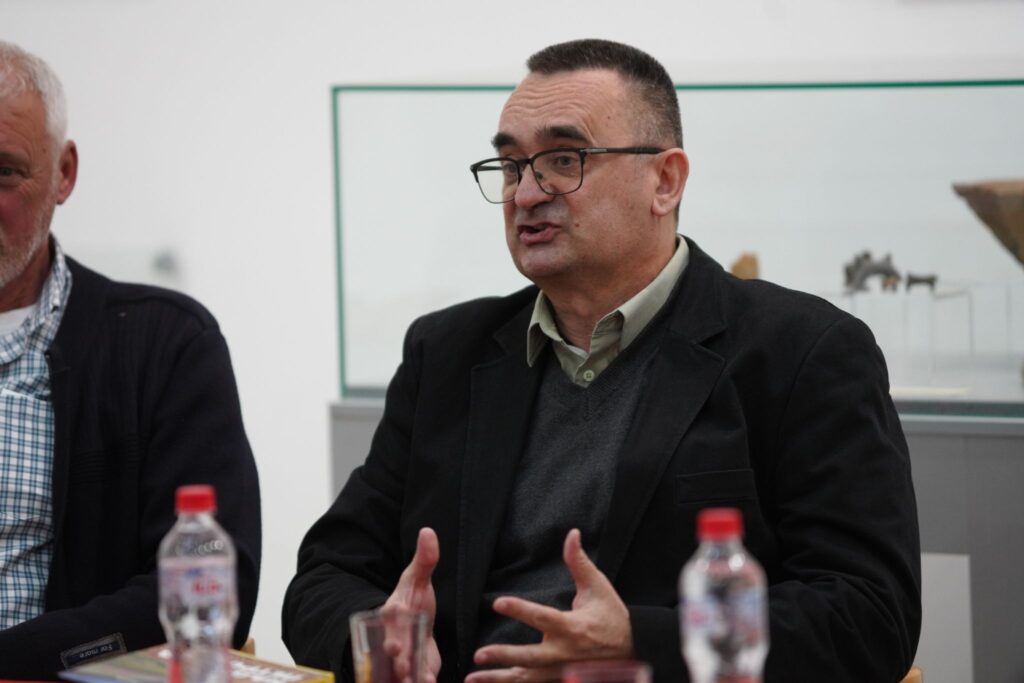
Boris Čeliković, editor of the “Sabornik” edition, reflected on the long and fruitful cooperation of the author with the publishing house Official Gazette. Čeliković emphasized that Miloš Timotijević is among the most important and most productive associates of this publishing house, with which he has cooperated for decades. He recalled his numerous earlier works – from books about the monasteries of the Ovčar‑Kablar Gorge, to participation in major scholarly projects, such as the extensive monograph on the Rudnik region, where he dealt with the history of this area in the 20th century. He particularly stressed the breadth of topics Timotijević has addressed: from regional history and culture (such as the monograph on Ravna Gora), through biographies of significant figures, to studies that question entrenched historical views – such as the book on financing the Chetnik and Partisan movements, in which, based on archival material, previous interpretations were challenged. He also referred to Timotijević’s work on the mission of rescuing Allied pilots in Serbia during the Second World War, emphasizing that this was a specific and insufficiently illuminated episode of history, showing the complexity of relations between different resistance movements.
Speaking about the latest book dedicated to Nadežda Petrović, Čeliković emphasized that the subtitle – “life and art in the service of the nation” – best describes her personality and activity. He stressed that this monograph can be read from several perspectives: historical, cultural, and social. He particularly pointed out the importance of the cultural context in which Nadežda acted – as an artist and as a woman who dedicated her work and life to the national idea and social engagement. In addition, he referred to her family environment, which was strongly marked by intellectual and cultural values. Čeliković emphasized that Timotijević views her personality in the broader context of time, culture, and society. This approach, as he explained, enables historical figures to be seen comprehensively, and not only through the narrow framework of classical historiography. Finally, he emphasized that the works of Miloš Timotijević are very valuable but insufficiently recognized, stressing that it is an honor for the Official Gazette to publish them, and thanked the author for his significant contribution to understanding Serbian history.
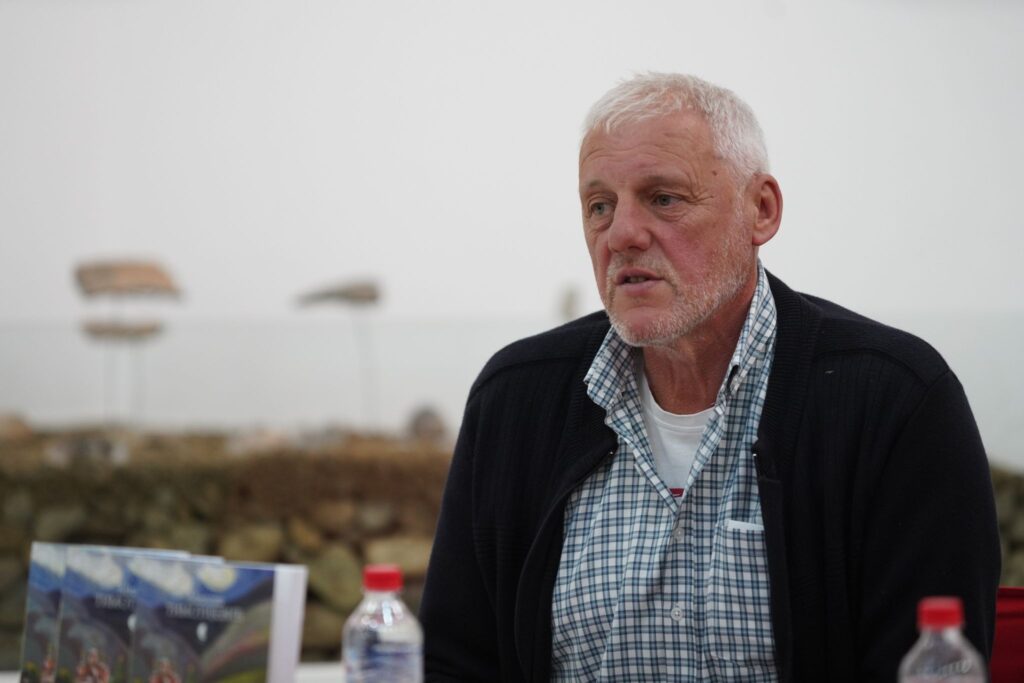
In his address, Miloš Timotijević, PhD, museum advisor of the National Museum Čačak, first emphasized his personal and professional connection with his homeland, stressing that the environment from which he comes was crucial for his research and creative inspiration. Čačak is the city where Nadežda was born and spent the first six years of her life.
Speaking about Nadežda Petrović, he particularly emphasized the importance of her family background and the environment in which she grew up. He presented the family of Dimitrije Mita Petrović as respected, educated, and materially secure, strongly rooted in national and cultural values. On her father’s side, the family was connected with the merchant and intellectual elite, while on her mother’s side it carried the tradition of military and national engagement, as well as ties with significant figures such as Svetozar Miletić.
He particularly emphasized the arrival of the Petrović family in Karanovac as an important event. Due to poor health conditions in Čačak, where they had previously lived, the family sought relocation to a healthier environment. They arrived in Karanovac in 1879 modestly, with a cart loaded with belongings and books, carrying with them the spirit of education and culture. Although there was a possibility of being relocated elsewhere, the locals accepted them and supported them to stay. There they quickly established close relations with the local community, including friendship with Jelena Dimitrijević, the youngest sister of the famous Dragutin Dimitrijević Apis. Nadežda and Apis spent part of their childhood in Karanovac, remaining friends for life. That period in Karanovac was significant for the formation of her personality and early life experiences.
Timotijević emphasized that Nadežda from her earliest age was exposed to strong cultural influences and grew up in a stimulating intellectual environment, which shaped her personality as an artist and socially engaged person. He particularly described the breaking of her engagement with an officer and her departure to study in Munich, where she encountered developed European culture and artistic currents, but at the same time retained a strong national identity. That the attitude toward the nation was dominant in her family is also shown by the name of the youngest child of Dimitrije and Mileva Petrović, later the significant writer Rastko Petrović. Namely, his godfather was Jaša Tomić, who named him after Prince Rastko, which was the first time in Serbia that a child bore the name of this famous member of the Nemanjić dynasty.
He emphasized that Nadežda belonged to a generation in which nationalism had a different meaning than today – it was connected with ideas of freedom, modernization, emancipation, and national liberation. In that context, Nadežda was not only an artist, but also an active participant in social and national life.
Timotijević emphasized that Nadežda Petrović was a pioneer of modern Serbian art, but that during her lifetime she was not sufficiently accepted. Her creativity often met with misunderstanding and sharp criticism, because it was in line with contemporary European currents, while in the stagnant environment of the Kingdom of Serbia it was far ahead of its time. Only decades after her death did her work receive deserved recognition. Nadežda Petrović became recognized as a great painter only in 1938 after a major retrospective exhibition.
In addition to her artistic activity, Timotijević emphasized her strong social engagement. Nadežda was a liberal nationalist and sympathizer of the Karađorđević dynasty. He spoke about her role in founding humanitarian and national organizations, as well as the resistance she encountered, even in her own environment. He emphasized that as a woman who acted publicly, she was often exposed to prejudice and misunderstanding. Her departure to the First Balkan War, where she served as a nurse, was described as a desire to be in male company. Such a description appeared in her obituary published in 1915 in the newspaper “Pijemont” after she died of typhus. The fact that this information appeared at that moment shows that the actual gossip during her life was even harsher.
He particularly emphasized her role in shaping the Yugoslav idea, explaining that she belonged to the current of integral Yugoslavism, which aimed at cultural and artistic connection of the South Slavs. King Peter, according to him, recognized the importance of Yugoslav‑oriented youth and artists and gave them support, thereby encouraging the development of this idea.
In that context, Nadežda was not a theorist, but a practical activist – through personal ties, artistic initiatives, and engagement she contributed to connecting South Slavic artists and developing a common culture. Her role in supporting artistic gatherings and colonies, which represented a “laboratory” of Yugoslavism, was particularly highlighted.
Timotijević explained that at that time there were several different visions of Yugoslavism, and Nadežda belonged to the one that saw the South Slavs as a single people, connected by common cultural heritage. That idea relied on folk tradition and epic poetry, but in art was expressed through modern means.
However, he emphasized that this vision was largely utopian and in practice proved difficult to achieve. Nadežda herself realized this during the wars, when the South Slavs found themselves on opposing sides, which for her represented deep disappointment.
Finally, Timotijević emphasized that Nadežda Petrović was a complex personality – not only a significant artist, but also a strongly socially and politically engaged figure. He recalled that she was long neglected as a painter, and that she was only later recognized as a pioneer of modern art, while her political and national engagement remained in the shadows. The aim of his book is to expand this image and encourage new research on her life and work.
The promotion ended with a discussion with an interested audience.