
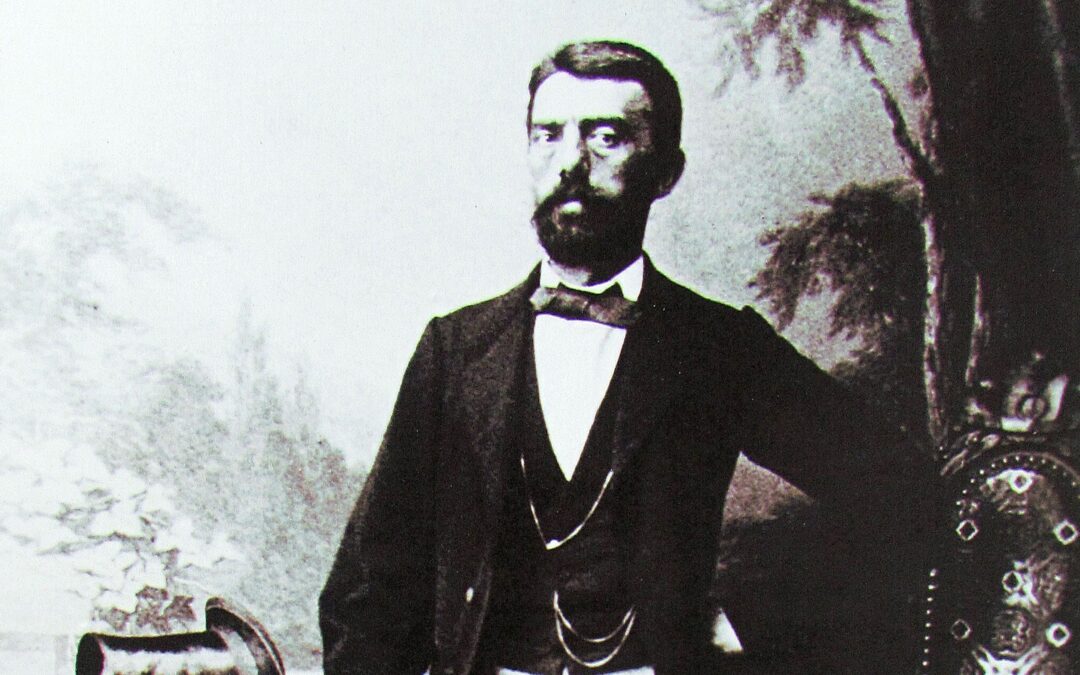
On this day, April 13th, 2026, it is the 200th anniversary of the birth of Konstantin Kosta Cukić, economist, professor of the Lyceum, and minister of finance and education of the Principality of Serbia. He was born in Kraljevo, in a very distinguished family. On both his father’s and mother’s side he descended from vojvodas of the First Serbian Uprising. His father was the stepson of vojvoda Pavle Cukić, and his mother the daughter of vojvoda Petar Nikolajević Moler. In his native Karanovac he began his schooling. He completed elementary school in Kruševac, and lower gymnasium in Kragujevac. He was one of the first Serbian students to study in the Austrian capital. In Vienna he studied state sciences, among which the most important was economics, guided by the desire to apply the acquired knowledge in his homeland. He continued his studies in Heidelberg, with Professor Karl Heinrich Rau, one of the leading economists and advocates of moderate economic liberalism. In Heidelberg he also earned the title of Doctor of Philosophy.
Cukić returned to Belgrade in 1848, when he became secretary of the Society of Serbian Letters, the predecessor of the Serbian Academy of Sciences and Arts. That year he also became professor of the Lyceum, where the Chair of Political Economy, Finance, and the Science of Trade was established. He was the first Serb born in Serbia to lecture at the Lyceum. Three years later he became rector of the Lyceum, but due to spreading liberal ideas he had to leave that position. After two years as secretary of the Ministry of Education, he was reinstated as professor at the Lyceum. In 1858 Prince Aleksandar Karađorđević, at the insistence of Prime Minister Stevan Magazinović, sent Cukić to Vienna with the task of representing the Principality of Serbia in the Danube Commission, whose goal was to regulate navigation on this river.
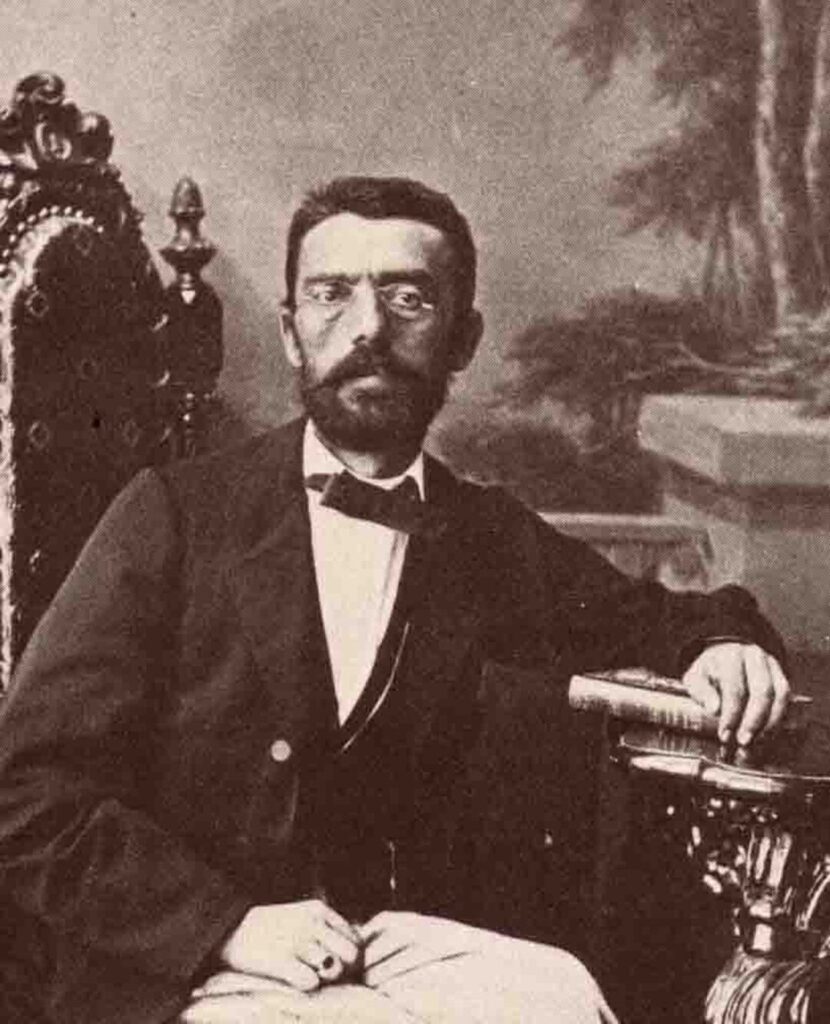
The dynastic change on the Serbian throne and the return of the Obrenović dynasty to power after the St. Andrew’s Assembly in 1858 resulted in the return of Cukić, a supporter of the Obrenovićs, to the country. He was offered the post of minister of foreign affairs, which he declined, citing his youth. Nevertheless, he became personal secretary to Prince Mihailo. He first became minister in 1861, when he was entrusted with the Ministry of Finance. He held this position until 1868. From January 1862 he was also minister of education and church affairs in the second government of Ilija Garašanin and the first government of Nikola Hristić, remaining in this post until January 1868.
As minister of finance, he worked on creating a more modern financial and tax system. He reformed direct taxes, introducing a combination of personal tax and property tax. He also introduced a tax on salt and a regal fee on tobacco to secure sufficient revenue for Prince Mihailo’s liberation plans. At his initiative, in 1862 the prince ordered that the Economic Department of the Ministry of Finance maintain a statistical service. At that time determining the amount of tax was problematic, as people often reported less property than they actually possessed. The result of the Economic Department’s work in statistics was the first “State Gazette of Serbia”, published in 1863. A year later a separate Statistical Department was formed within the Ministry of Finance. Kosta Cukić can also be considered one of the key figures in the formation of the National Bank of Serbia. In 1862 he founded the Administration of Funds, the first credit institution in Serbia. Its task was to provide favorable loans to enable economic progress. Thanks to him, members of parliament received daily allowances for the first time. However, he repeatedly reduced his own salary, becoming one of the rare ministers whose name was never associated with corruption, so in Belgrade it was said of honest men “honest as Cukić.” During his administration of the Ministry of Finance the foundation for a new monetary system was created by passing the Law on Minting Serbian Coin, which introduced copper coins of 1, 5, and 10 para. Several years later, in 1875, the transition from para to dinar was made.
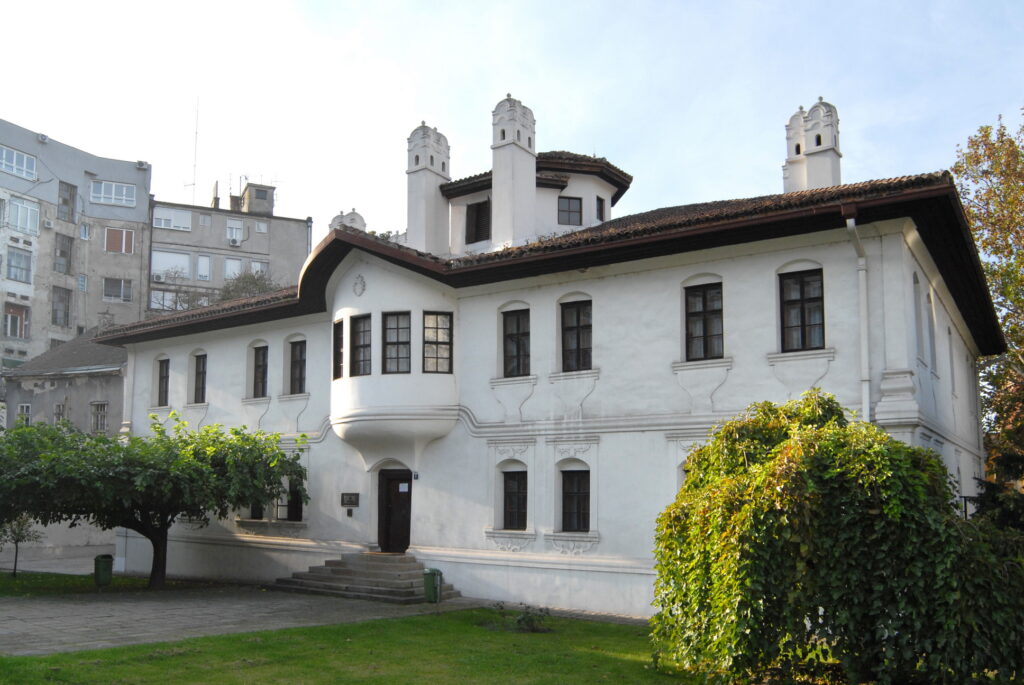
Important reforms were also carried out by Kosta Cukić as minister of education. In 1863 the Law on the Organization of the Great School was adopted. The Lyceum thus became the Great School with three faculties. Thanks to Cukić, Miša Anastasijević donated his building to the Great School. Cukić also contributed to the founding of the Higher Women’s School in Belgrade. He founded the Real Gymnasium, the so‑called “realka” where greater attention was paid to technical and natural sciences. He was responsible for introducing art and music education into gymnasiums. During his mandate the number of students in schools doubled. He was also president of the Society of Serbian Letters, which in 1864, after a brief interruption, resumed its work under the name Serbian Learned Society. Kosta Cukić was its regular member. He was a friend of Ilija Kolarac, whom he encouraged to create the Kolarac Fund and the Kolarac Endowment. As a great lover of art he was founder of the First Serbian Singing Society and advocated for the founding of the National Theatre.
After the assassination of Prince Mihailo in 1868, Kosta Cukić was temporarily without engagement. However, the following year he was appointed representative of Serbia in Bucharest. Five years later he was sent to Austria, where he represented Serbian interests as diplomatic agent, a new rank in Serbian diplomacy. At that time, he wrote “Cipher Dictionaries” which Serbian diplomats used in subsequent years. He declined Prince Milan Obrenović’s offer to become prime minister and remained in Vienna. After the Berlin Congress and the proclamation of Serbia’s independence, Kosta Cukić received the high title of extraordinary envoy and plenipotentiary minister of Serbia in Vienna. He died in the Austrian capital on March 5th, 1879, of tuberculosis.
Kosta Cukić was in the mid‑19th century the leading authority in the field of economics. He also established professional literature in this field in Serbia, since until then there had been no textbook on economics written in Serbian. During the 1850s and early 1860s he wrote a three‑volume textbook “State Economy” which for many years was used as a textbook at the Great School. Čedomilj Mijatović, later minister of finance, considered that it was precisely Kosta Cukić who laid the foundations of modern finance in Serbia
He was married to Angelina, with whom he had six children. He is also considered responsible for introducing the card game préférence into Serbia.
Milena Baltić
Editor of the Education and Scientific Program
of the Official Internet Presentation of the National Museum Kraljevo