
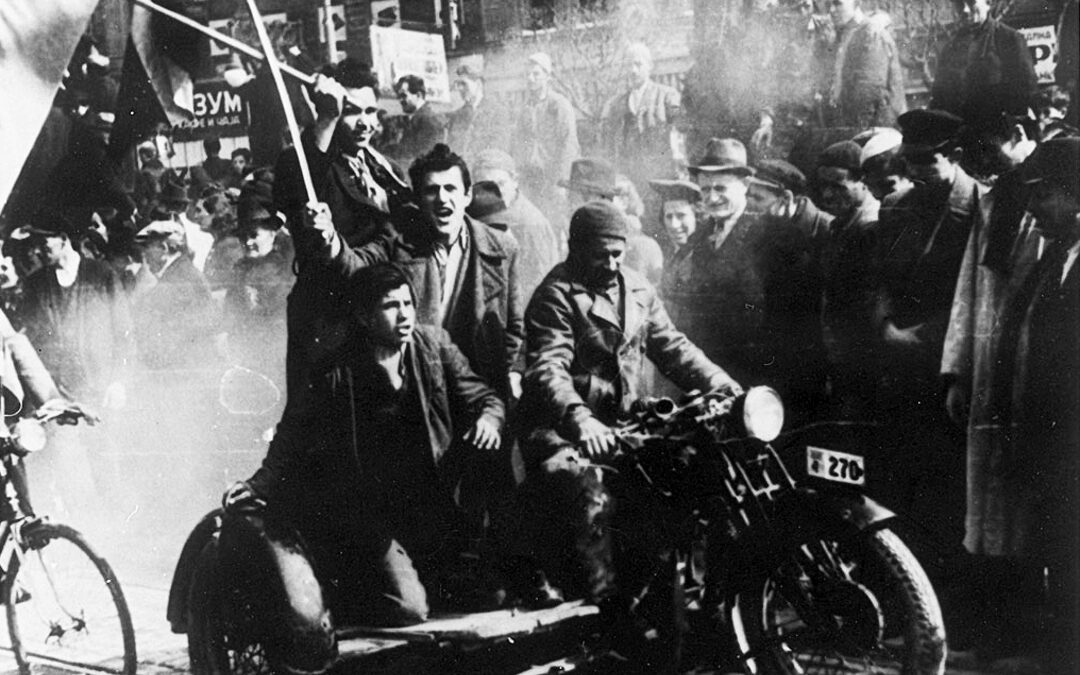
On this day, March 27th, 2026, it is the 85th anniversary of the military coup that led to the fall of the Cvetković–Maček government, as well as the demonstrations that followed. These events were the consequence of the unpopular decision of the Yugoslav authorities to join the Tripartite Pact. At the beginning of the Second World War, the Kingdom of Yugoslavia declared its neutrality. However, over time it was exposed to increasing pressure from both warring sides, which intensified after Italy’s attack on Greece in October 1940. At the beginning of 1941, the pressure of the Third Reich on Yugoslavia reached its peak. By March 1941, almost all Yugoslavia’s neighbors had joined the Tripartite Pact, with Greece as the only exception. Preparing for the invasion of the Soviet Union, Germany sought to secure its influence on the Balkan Peninsula. In addition, Hitler wanted to ensure Yugoslavia’s non‑interference in the attack on Greece, which for months had successfully resisted Germany’s ally Italy.
In February 1941, Hitler invited the Yugoslav prime minister and foreign minister for a visit, asking them to declare Yugoslavia’s position as soon as possible, saying that the best way to preserve peace was to join the Tripartite Pact. Although the Yugoslav delegation did not accept this proposal, he requested to speak with Prince Paul. The prince turned to the British for help, to whom he was personally inclined, asking the British ambassador whether Yugoslavia could count on assistance in the event of a German attack. However, no concrete help was guaranteed. The prince met with Hitler on March 4, three days after Bulgaria joined the Tripartite Pact. Although he managed to buy a little more time, it was clear that Yugoslavia’s neutrality was becoming untenable.
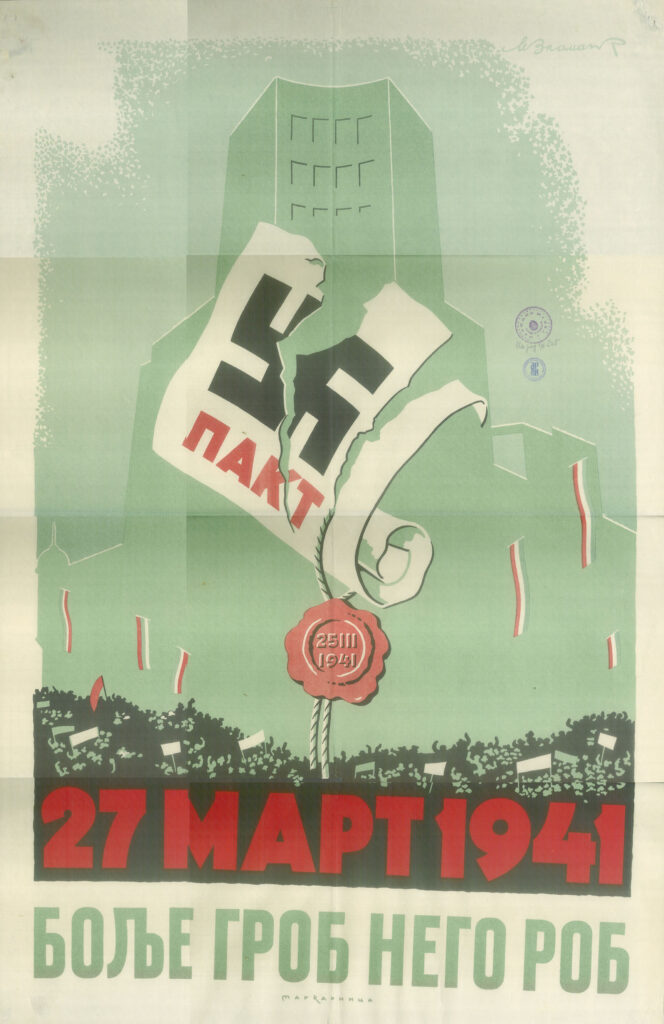
On March 25th, at the Belvedere Palace, Yugoslavia officially joined the Tripartite Pact. The Axis powers guaranteed that they would respect Yugoslavia’s territorial integrity, would not demand military assistance, nor require passage of their troops across Yugoslav territory. Secretly, the annexation of Thessaloniki to Yugoslavia was promised. However, the news of the events in Vienna caused major protests in Yugoslavia itself. A significant part of the population, opposition parties, as well as the Serbian Orthodox Church and Patriarch Gavrilo Dožić opposed joining the Tripartite Pact. Some Yugoslav officers were also dissatisfied with this development. Even before the decision to join the Pact, General Dušan Simović, commander of the Yugoslav Air Force, told Prince Paul that such a decision would mean an alliance with mortal enemies and would be disastrous for the Serbian people.
It was precisely the dissatisfied officers who organized and carried out the coup in the night of March 26th–27th. The main organizer of the coup itself was General Borivoje Bora Mirković. Learning that the Yugoslav delegation had returned from Vienna, he decided to implement his plan that very night. General Simović, who was to form the new government after the coup, initially hesitated, unsuccessfully trying to postpone its execution. That night, troops occupied the ministry buildings according to plan. Everything was finished by morning. King Peter was declared of age, and the new government was formed by General Simović. The only casualty of the coup was a policeman killed by soldiers because he refused to hand over the radio station. Prince Paul learned of the coup on his way to Slovenia. He decided not to resist or risk civil war, but withdrew from his position and left the country.
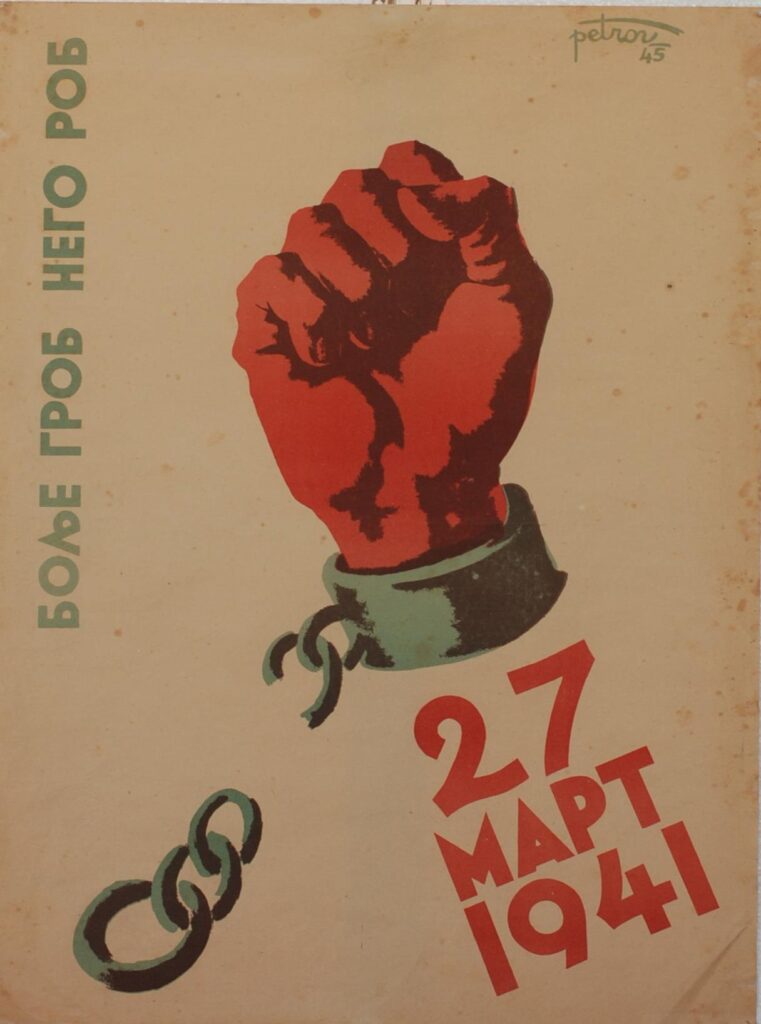
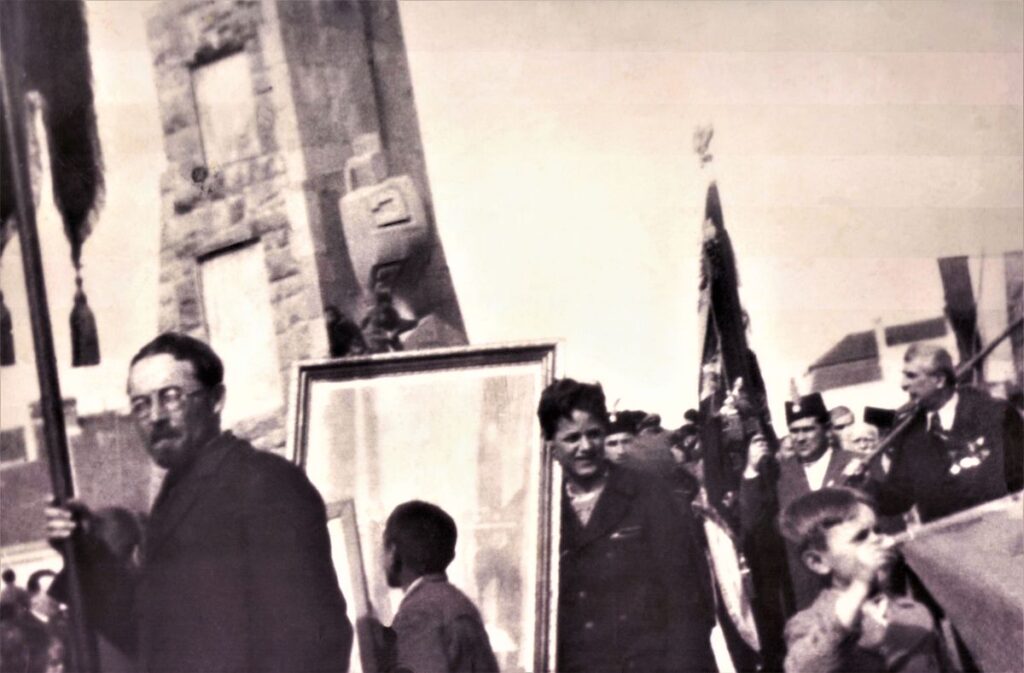
The news of the military coup was met with enthusiasm by Belgraders and residents of other cities. Demonstrations were organized on March 27th, with the well‑known slogans “Better the grave than a slave” and “Better war than the pact.” Patriotic songs were sung and slogans shouted against Hitler and Mussolini. The people of Kraljevo also did not hide their dissatisfaction with the policy that led to joining the Tripartite Pact. Upon hearing that the Yugoslav delegation had traveled to Vienna, Bishop Nikolaj Velimirović and members of the Association of Serbian Warriors (1912–1918) held a protest rally. When news of the coup reached the city, demonstrations were organized similar to those in other cities. Demonstrations on the central square in Kraljevo gathered war veterans, citizens, workers, students of the Gymnasium (the principal, Mihajlo Knežević, carried a portrait of King Peter I), as well as members of the Communist Party of Yugoslavia. On the other hand, Hitler immediately upon receiving the news of the coup decided to attack Yugoslavia. Already on March 27th he signed Directive 25, ordering the attack, disregarding the assurances of the new government that it did not want war with the Axis powers. The attack on Yugoslavia began without a formal declaration of war on April 6th, 1941. The Germans seized Sip on the Danube, and early in the morning bombed Belgrade. After only 12 days, Yugoslav resistance was crushed, and capitulation was signed on April 17th. In Kraljevo, resistance was offered along the banks of the Ibar and on the right bank of the West Morava. In the city itself, near the post office building, several soldiers of the Sixth Bosnian Infantry Regiment were killed, along with their commander, reserve lieutenant Žarko Tomić. German occupation of Kraljevo began on April 14th, 1941.
Milena Baltić
Editor of the Education and Scientific Program
of the Official Internet Presentation of the National Museum Kraljevo