
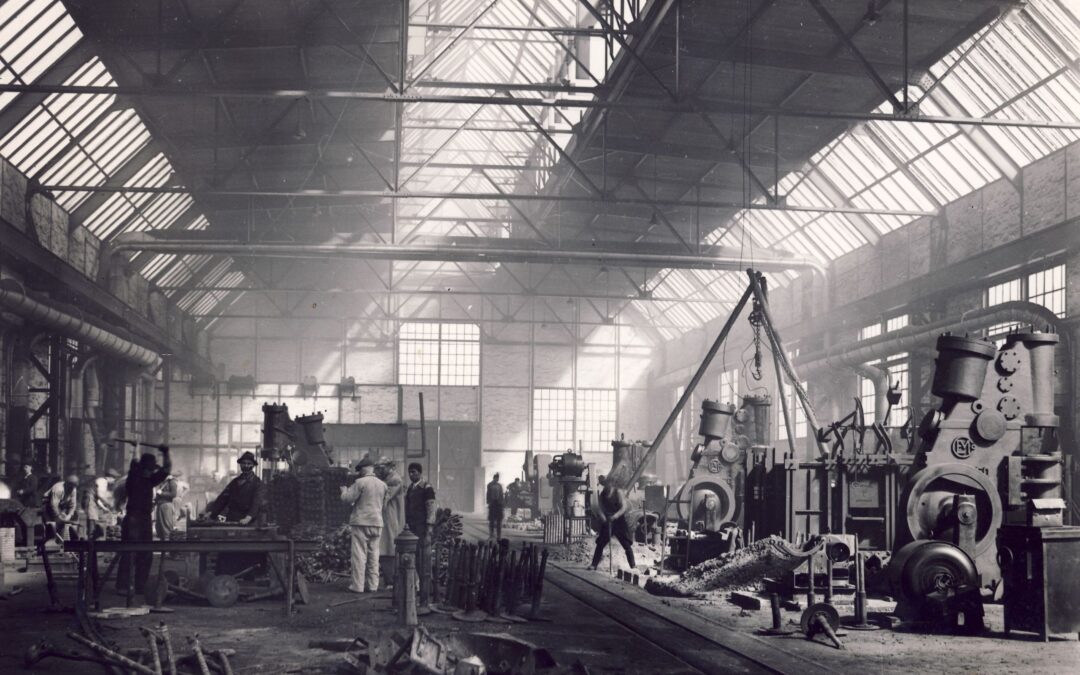
On this day, April 1st, 2026, it is the 90th anniversary of the beginning of the work of the Railway Workshop, later the Wagon Factory. Its prehistory begins after the First World War, when the Kingdom of Serbs, Croats, and Slovenes received from Germany, as part of war reparations, a complete workshop for the production of locomotives and rail vehicles. The machines necessary for the work of this workshop arrived in 1925, but were initially stored in Niš, since at that time Kraljevo was not yet an important railway junction. With the construction of the standard‑gauge railway Kragujevac – Kraljevo – Kosovska Mitrovica in 1929–1931, work on opening the Railway Workshop accelerated. Final works on its opening were completed during 1935. A temporary power plant was built, as well as a hall for repairing and producing new locomotives.
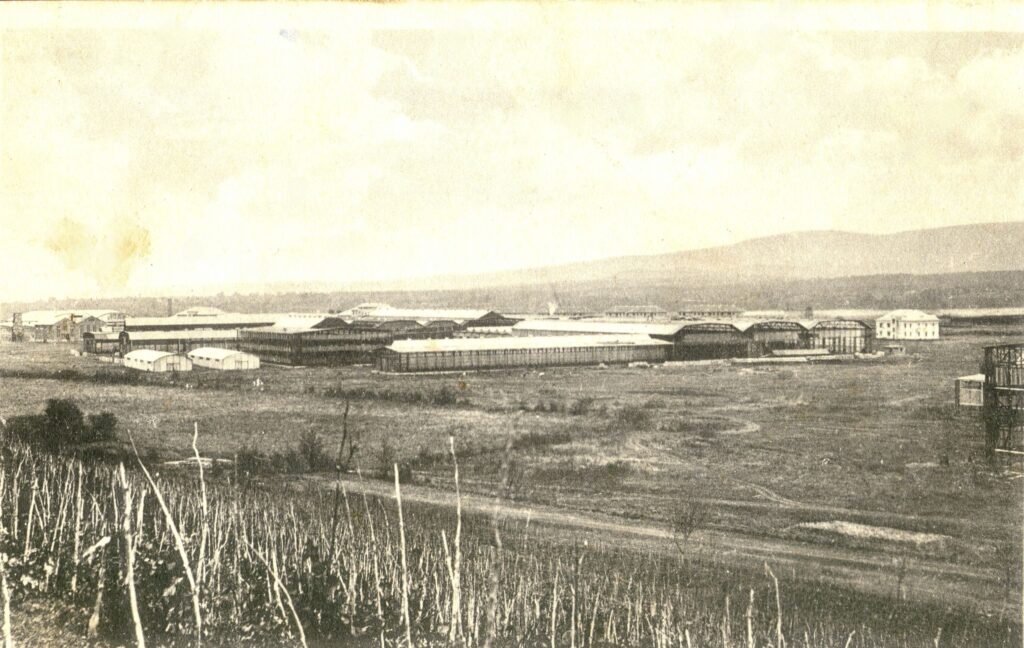
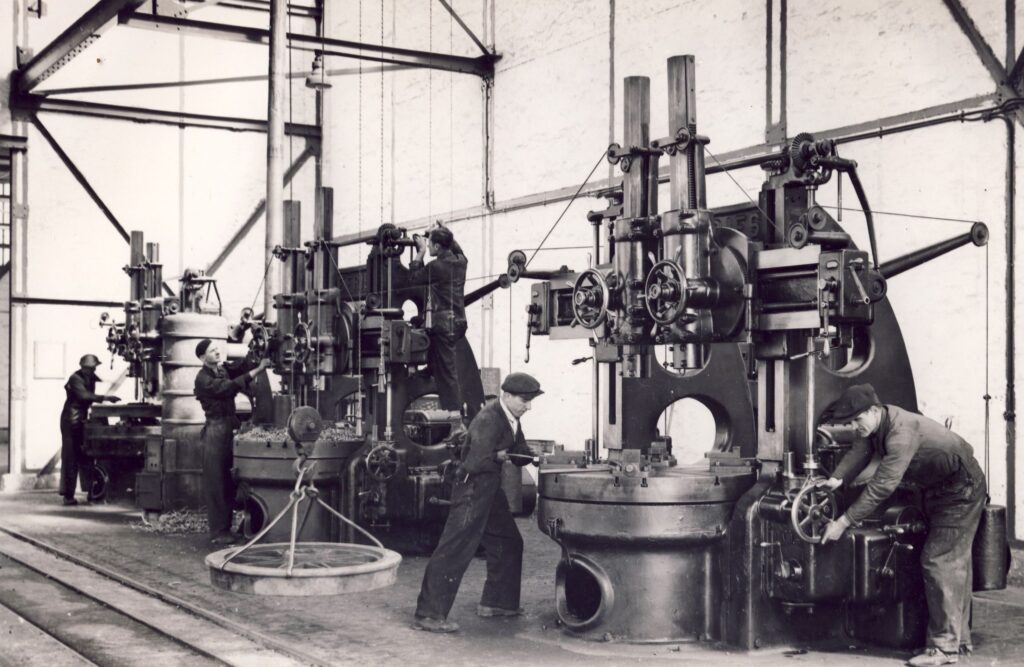
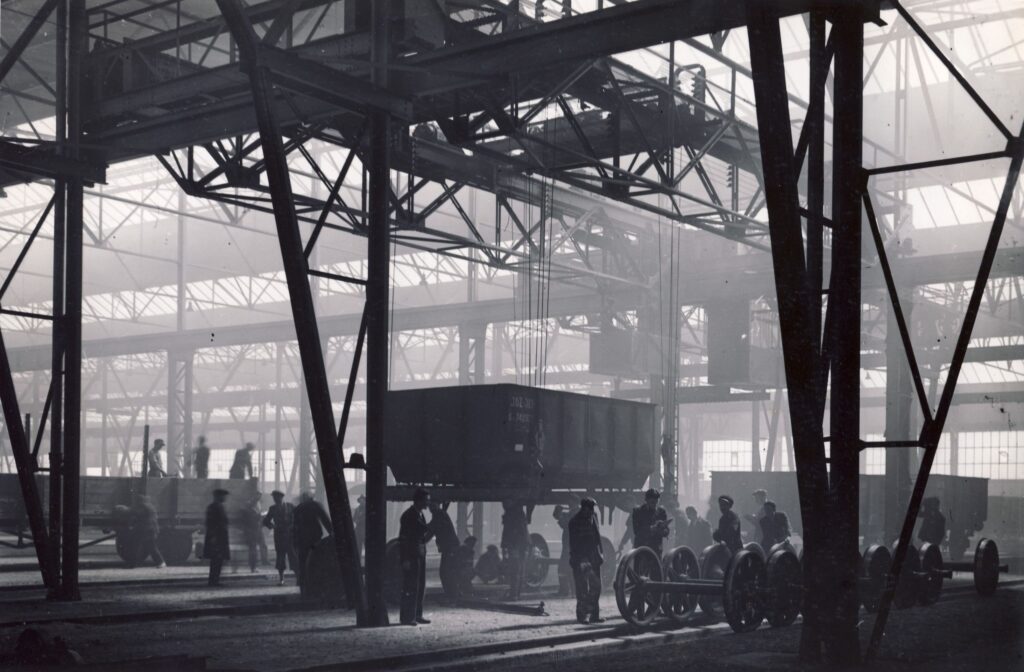
Soon after beginning its work in 1936, the Railway Workshop became an important factor in the economy of Kraljevo. Good working conditions attracted settlers from across the country, as well as Russian émigrés. Specialists also came from railway services in Maribor, Zagreb, Slavonski Brod, Subotica, Zrenjanin, Smederevo, and Sarajevo. The Railway Workshop contributed to the development of other, especially related industrial branches. On the eve of the Second World War, the Railway Workshop employed 800 workers, including 14 engineers. At that time, they repaired about 5,000 passengers and freight wagons annually but also worked on producing new ones. Thus, before the outbreak of war, 10 freight wagons for standard‑gauge railways and another 100 wagons for narrow‑gauge railways were produced.
The further rise in the production of new wagons was interrupted by the outbreak of the April War. Work on a contingent of 100 new wagons for standard‑gauge railways was halted. The importance of Kraljevo as a major railway junction, as well as of the Railway Workshop itself, was recognized by the new occupying authorities, so the Germans sought to restore its work as soon as possible for their own needs. However, in the following months some workers left Kraljevo to join resistance movements. About 40 workers, among them Živan Maričić, joined the partisans on Mount Goč and the newly formed “Jovo Kursula” detachment. Maričić later became commander of the Fourth Kraljevo Battalion of the First Proletarian Brigade, and was killed near Foča in 1943. He was proclaimed a national hero, and after the war the factory bore his name.
The brutal German reprisal in October 1941 also led to the deaths of a large number of Railway Workshop workers. Together with their fellow citizens, they were arrested as hostages and imprisoned in the locomotive hall of their factory. Workers of the Railway Workshop and other railway services made up almost a third of the executed hostages. Between October 15th and 20th, 1941, the Germans executed as many as 333 workers of this factory and another 414 railway employees. Such a bloody reprisal affected the work of the factory. In a report of the Railway Workshop sent to the General Directorate of Serbian State Railways on November 13th, 1941, it was stated that the workers were faced with the trauma caused by the mass execution, and were worried about the survival of their families before the coming winter, since there was neither enough food nor enough fuel: “The staff now at work has suffered so much that everyone’s nerves are exhausted and at the end of their strength. In addition, the shortage of basic foodstuffs further ruins these nerves with worry for survival and the specter of hunger that looms, while vital strength weakens due to poor nutrition. Foodstuffs, even if found somewhere, are terribly expensive. Everyone lives off reserves prepared for winter, as much as they have, and from occasional finds of some foodstuffs. Reserves are very small, since this situation arose just at the time when procurement for winter began, so it was interrupted and no one stocked up sufficiently. The same is the case with fuel, since coal for the staff has not arrived and probably will not arrive. Therefore, prospects for winter are very miserable and dreadful.”
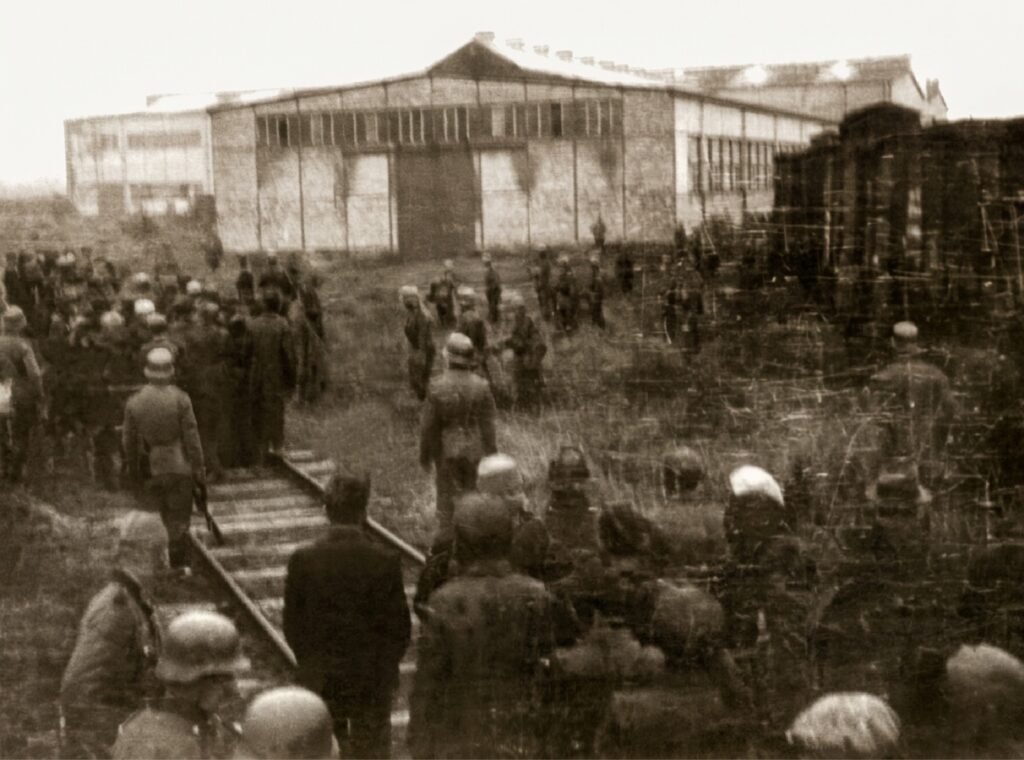
During the remaining war years, the Railway Workshop operated with significantly reduced capacities. In 1942, German authorities plundered its premises, taking away more than 100 functional wagons. The locomotive hall, in which hostages had been imprisoned in October 1941, was dismantled and transferred to Wiener Neustadt, about 50 kilometers south of Vienna. This hall is still located there today, known also as the “Serbian Hall.” The Railway Workshop suffered further damage during the Allied bombing on July 11th, 1944, since it was considered to be working for German military needs. Upon withdrawing from the city in November of that year, German soldiers mined the factory grounds, but the workers bravely prevented its complete destruction.
Despite all the damage the Railway Workshop suffered, as well as all the difficulties and traumas faced by its workers, its work continued after the war. Already the day after the units of the Yugoslav Partisans entered, the people of Kraljevo began clearing the ruins so that the factory could resume work as soon as possible. During the May Day celebration in 1946, the workers presented the first locomotive with a composition of freight wagons, thereby symbolically renewing the factory’s work. In the following decades, the Wagon Factory “Živan Maričić,” as it was now named, once again became one of the most important factors in Kraljevo’s economy and one of the leading enterprises in Yugoslavia in its branch of industry. Unfortunately, the breakup of Yugoslavia, international sanctions, and privatization led to the closure of this factory, which went bankrupt in 2016, after 80 years of existence.
Milena Baltić
Editor of the Education and Scientific Program
of the Official Internet Presentation of the National Museum Kraljevo