
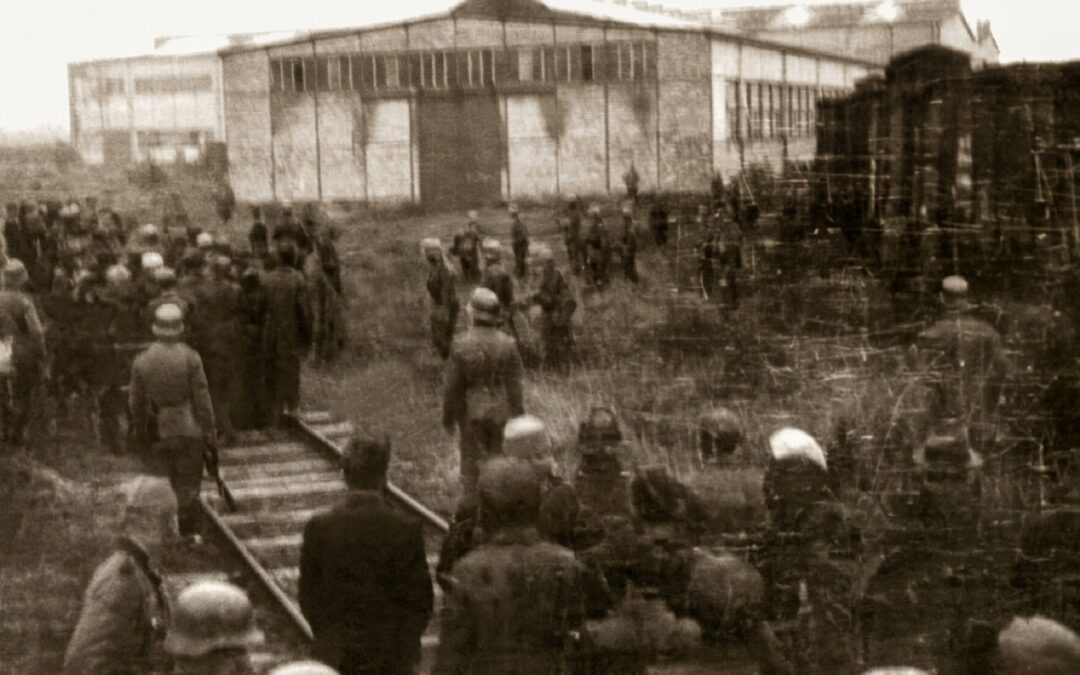
On this day, April 14th, 2026, it is the 85th anniversary of the beginning of the German occupation of Kraljevo in the Second World War. By early 1941, the Kingdom of Yugoslavia, with the expansion of the Tripartite Pact, had become almost completely surrounded by members of this alliance. Between British and German pressures to choose one of the warring sides, Yugoslavia could no longer maintain its neutrality. Since Germany was preparing for an attack on the Soviet Union, it wanted to secure its position in the rear, in the Balkans. In March 1941 Yugoslavia decided to join the Tripartite Pact, which was done on March 25th, 1941. However, this decision was extremely unpopular in the country. In Kraljevo, a protest rally was held the same day in front of Bishop Nikolaj’s residence. The gathered then moved toward the city center, where, after speeches condemning accession to the Pact, the protest ended. When news of the military coup in Belgrade arrived two days later, Kraljevo joined other Yugoslav cities in holding demonstrations of support. On the main city square gathered war veterans, gymnasium students, workers, and members of the Communist Party of Yugoslavia. The crowd was addressed by Mihajlo Knežević, director of the Gymnasium.
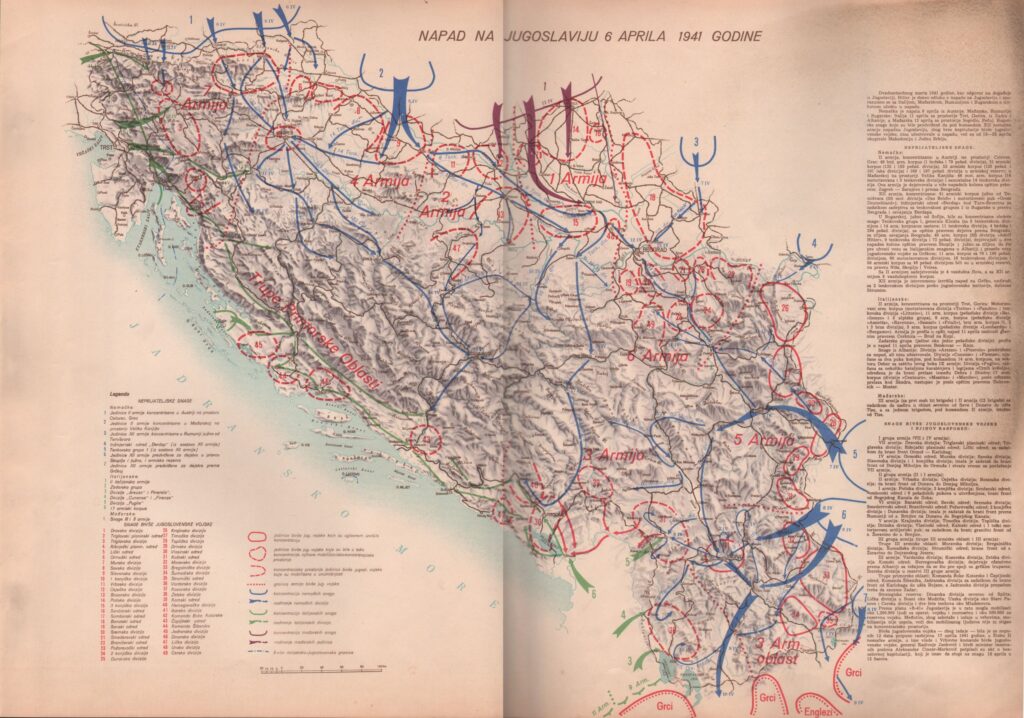
Despite assurances given by the new Yugoslav government, led by General Dušan Simović, to Germany and Italy, claiming that the coup was an expression of dissatisfaction concerning internal politics and that the new government intended to respect all international obligations the state had undertaken, Hitler decided to attack Yugoslavia. The decision was made already on March 27th. The attack began at dawn on April 6th, without a prior declaration of war. German forces seized Sipa on the Danube and bombed Belgrade. Despite resistance from some soldiers, especially members of the air force, Yugoslav defense was quickly broken. Contributing factors were poor equipment of the Yugoslav army, lack of command staff, and interethnic tensions. German forces advanced from two directions: one part through Ljubljana, Zagreb, and Sarajevo toward Belgrade, and another from Bulgaria, to cut ties between Yugoslavia and Greece. By April 10th, general collapse prevailed along the entire front line, Macedonia was occupied, and in Zagreb the Independent State of Croatia was proclaimed.
As for Kraljevo itself, it had great importance as a major railway junction, and as a city with the Railway Workshop, Military Technical Institute, and Aircraft Factory, whose work the Germans could use for their military industry. The Germans therefore sought to seize the Aircraft Factory undamaged, so they did not bomb it. On the other hand, even before the war began, on April 4, the Yugoslav army placed the factory under the administration of the Military Commissariat, giving it the status of a military unit subordinate to the commander of the Military Technical Institute. However, as German forces occupied more territory, on April 10 a decision was made to place explosives to destroy the factory and institute. On April 14, by damaging special machines necessary for production, the factory could no longer continue working for the German air force.
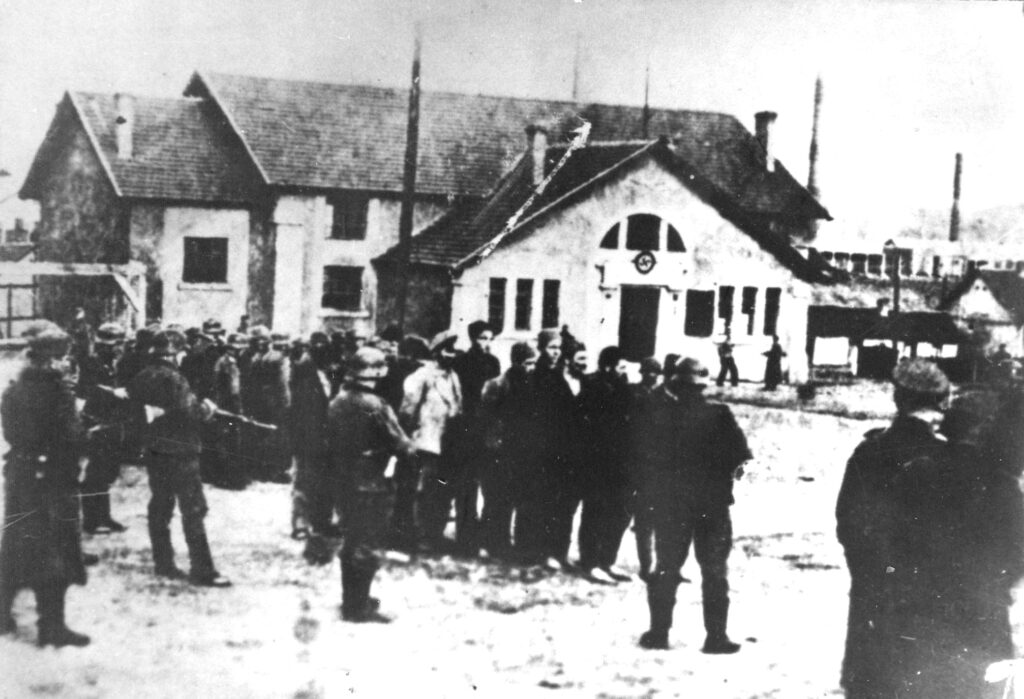
On the first day of the war, April 6th, a German reconnaissance plane from Bulgaria flew over Kraljevo, which was shot down by anti‑aircraft defense, and the captured pilots were paraded through the city. The defense of Kraljevo was organized along the banks of the Ibar, the right bank of the West Morava, and along peripheral streets, where trenches were dug. Resistance to German reconnaissance units was offered at the approaches to the city from Kragujevac and Kruševac, from where the bulk of German troops arrived. Near the Agricultural School was stationed a battery of anti‑aircraft artillery. The withdrawal of most of the Yugoslav army from Kraljevo toward Čačak began on April 9th, and during this chaotic retreat the population began taking food and weapons from military warehouses. The local command in Kraljevo, led by Major Nikola Todorović, tried to restore order. Those days the citizens of Kraljevo could hear strong explosions, and the city and its surroundings were covered with thick smoke. These were consequences of explosions of gasoline tanks near Vitanovac and Bogutovac, which for the citizens was a sure sign that the bulk of the Yugoslav army was retreating.
From April 10th the defense of the city was taken over by soldiers of the Sixth Bosnian Regiment, commanded by reserve lieutenant Žarko Tomić, an agronomy engineer from Mohovo near Ilok. These soldiers dug a trench near the post office in the shape of the Cyrillic letter G, preparing to offer the last resistance. In the ensuing battle one German soldier was killed, and post office manager Borivoje Popović was severely wounded. In this battle Žarko Tomić was also killed. He was buried in the Kraljevo cemetery, in a grave marked “unknown officer”. After his identity was discovered, his family took his remains and buried them in the family tomb in Novi Sad.

From April 10th the defense of the city was taken over by soldiers of the Sixth Bosnian Regiment, commanded by reserve lieutenant Žarko Tomić, an agronomy engineer from Mohovo near Ilok. These soldiers dug a trench near the post office in the shape of the Cyrillic letter G, preparing to offer the last resistance. In the ensuing battle one German soldier was killed, and post office manager Borivoje Popović was severely wounded. In this battle Žarko Tomić was also killed. He was buried in the Kraljevo cemetery, in a grave marked “unknown officer”. After his identity was discovered, his family took his remains and buried them in the family tomb in Novi Sad. 60. On April 14th, German troops of the 60th Motorized Division entered Kraljevo, coming from the direction of Kruševac and Trstenik, crossing into the city over a pontoon bridge on the Ibar. Executive authority in the city was taken over by the rear commander of this division. A curfew was imposed, so no one was allowed on the streets after 6 p.m. Municipal authorities and members of the gendarmerie were called to return to duty, but under the auspices of the occupation authorities. By the end of April, there was a change in the composition of the occupation troops. The 60th Motorized Division was sent to the area between Kosovska Mitrovica and Peć, and in Kraljevo was temporarily stationed the 3rd Battalion of the 514th Infantry Regiment of the 294th Infantry Division. Kraljevo belonged to Ortskommandantur (later Kreiskommandantur) I/833 Kruševac, which in turn was under Feldkommandantur 609 Niš. In April an auxiliary collection camp for prisoners of war, a warehouse of war booty, and a refugee reception center were formed in Kraljevo. During May 1941 garrison troops began arriving in Kraljevo. These were members of the 717th Infantry Division, formed in the area of Bruck an der Leitha in Austria. It was precisely this division that in October 1941 carried out the mass reprisal against the population of Kraljevo.
Milena Baltić
Editor of the Education and Scientific Program
of the Official Internet Presentation of the National Museum Kraljevo