
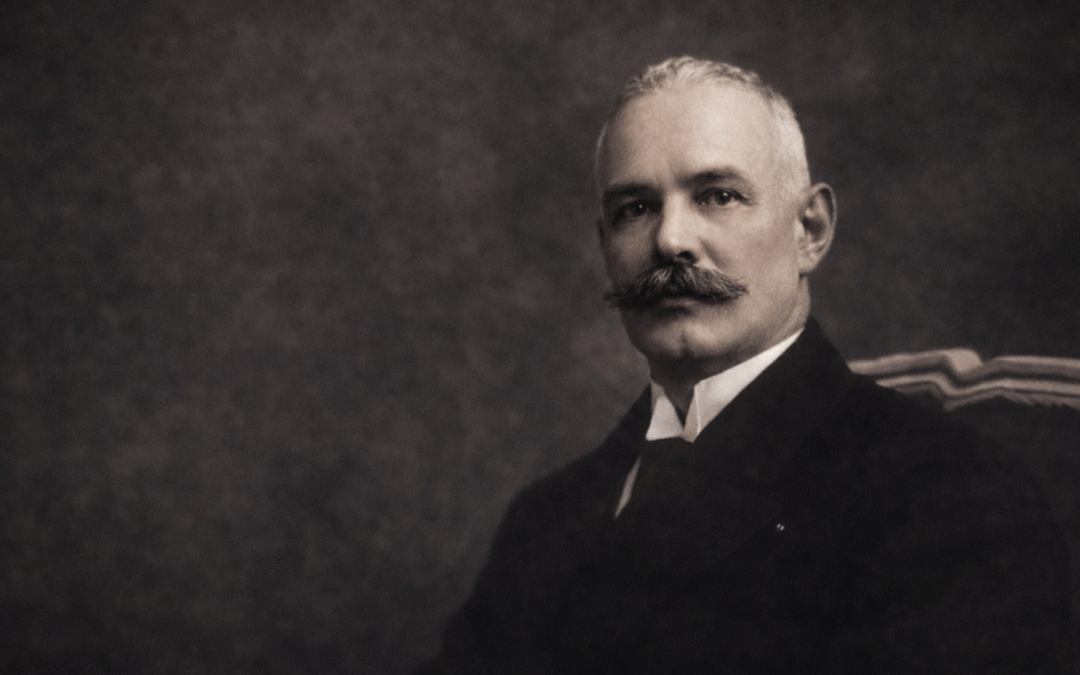
Petar Bogavac was a merchant, banker, member of parliament, and senator from Kraljevo, as well as a benefactor and philanthropist. He was born in the village of Savovo near Studenica in 1870. He completed elementary school in his native village and then came to Kraljevo, where he attended the trade school. After finishing school, he began his career in commerce. In 1890 he opened his own independent trading shop. In addition to trade, Bogavac was engaged in banking and politics. He was a supporter of the People’s Radical Party. He was first elected as a member of parliament in 1894, representing the Čačak district. He held this mandate for a full 14 years, until 1908, when he declined re‑election. However, Bogavac’s political career was not over. As one of the prominent citizens of Kraljevo, he was elected president of the municipality in 1910. He was elected to this position once again ten years later.
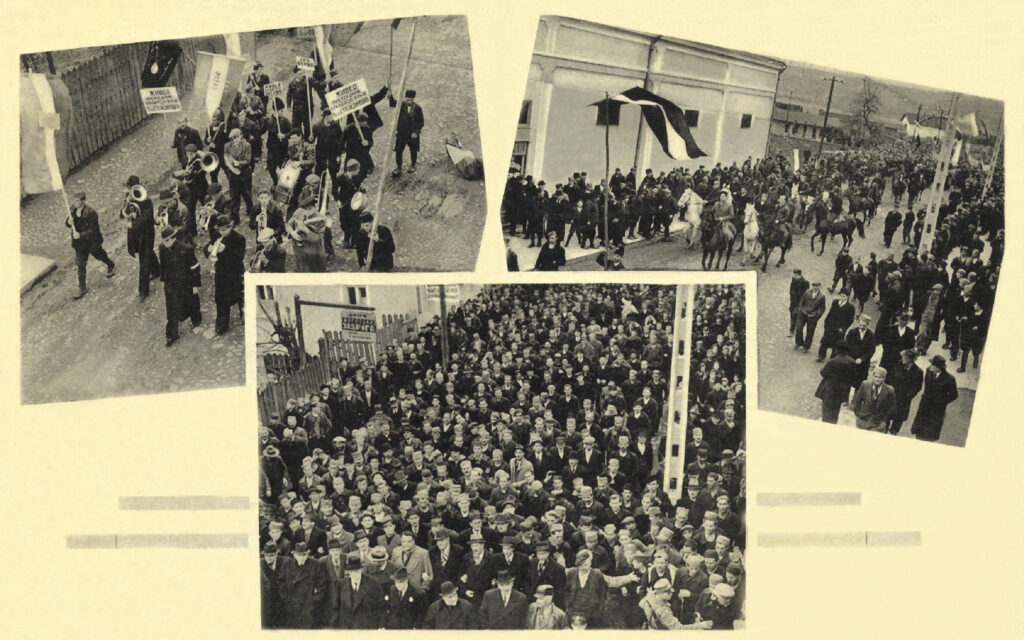
Bogavac also actively participated in the economic development of Kraljevo. In 1897 he became a member of the Board of Directors of the Royal Joint‑Stock Savings Bank, the oldest financial institution in Kraljevo, with the goal of providing favorable loans. In addition, Bogavac advocated for the establishment of the Royal Economic Bank. It was founded in 1912, with Bogavac as its president. During the Austro‑Hungarian occupation, documents bearing the seal of the Kingdom of Serbia were destroyed, including a significant portion of the bank’s records. Despite this, Petar Bogavac and his wife Bisenija managed to hide the pledge book, thereby facilitating the bank’s restoration after liberation.
Alongside his involvement in Kraljevo’s financial institutions, Bogavac played an important role in transforming Mataruška Banja into a major spa resort. After the healing properties of the spa’s water were discovered in 1898, a group of prominent citizens of Kraljevo began working on developing spa tourism. Together with Archpriest Savatije Božić, tax officer Milutin Vesnić, merchant Svetozar Bunjak, and district physician Dimitrije Antić, Bogavac participated in founding the Royal Joint‑Stock Cooperative, which initially managed Mataruška Banja. When in 1921 the Royal Economic Bank merged with the Royal Joint‑Stock Cooperative, Bogavac was elected its president. He also took part in founding the Royal Electric Joint‑Stock Company “Ibar” in 1925, whose goal was to introduce electric lighting and bring drinking water to the city.
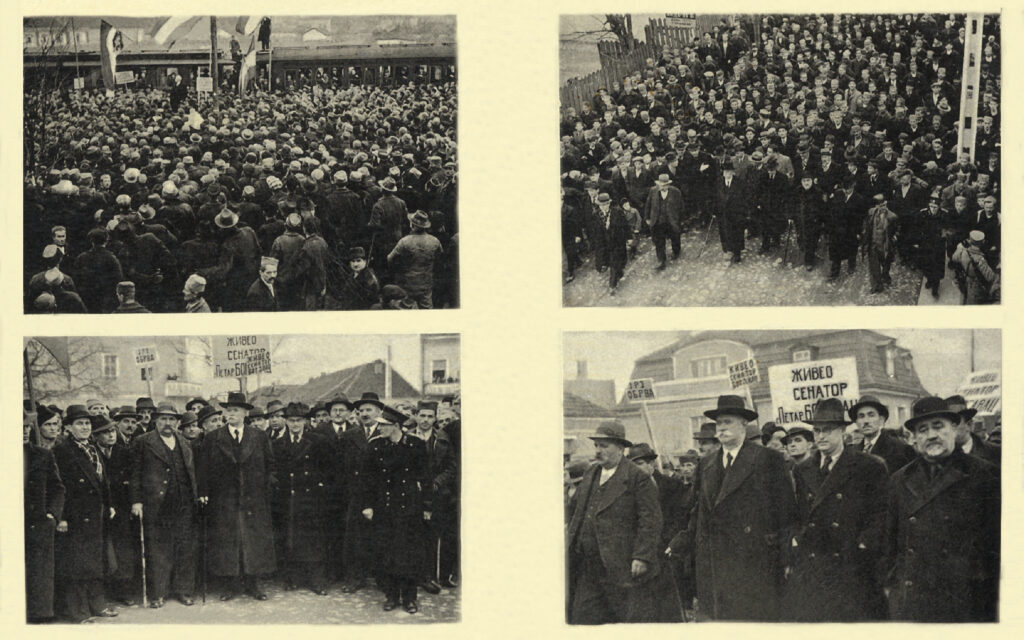
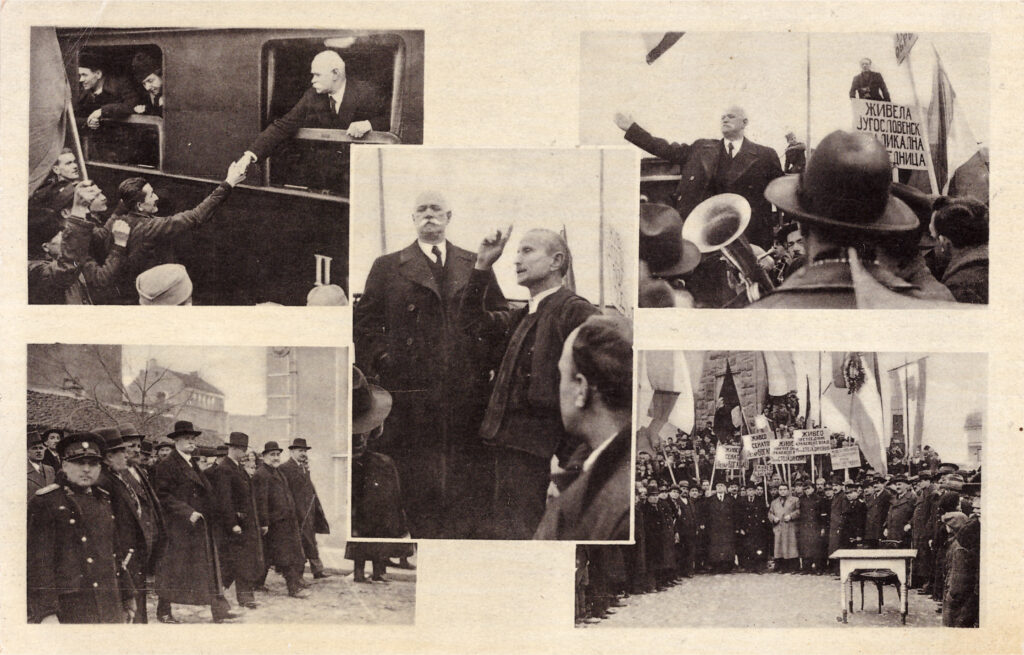
Throughout the decade he regularly won elections for member of parliament. In addition to his reputation among fellow citizens, these victories were supported by his influence in the Royal Economic Bank. At that time, banks were in a way a reflection of political divisions—some were known as “radical,” others as “democratic.” In Kraljevo, Bogavac was also the owner and founder of the radical newspaper Narodna samouprava (“People’s Self‑Government”). In 1930 he was appointed to the position of provincial councilor. He ran again for parliament in 1935, this time on the list of Bogoljub Jevtić, and his candidacy was once again successful. After the formation of the Yugoslav Radical Union, he joined this political option. He served as vice president of the Club of Members of Parliament of the YRU, as well as president of the District Organization of this party in the Žiča district.

The second half of the 1930s marked the peak of Bogavac’s political career. On February 6, 1938, he was elected senator. In the same year he was awarded the Order of the White Eagle, 5th Class. The Royal Regency granted him this decoration for his “contribution to public affairs.” In addition to his participation in the aforementioned organizations, Bogavac supported humanitarian associations such as the Kraljevo branch of the society “Princess Ljubica”. He was also responsible for founding the Kraljevo Trade Youth Association and was a member of the school board of the Trade School.
In his will, written only a few days before his death, he recorded the following: “I am 71 years old. I have no children. I have only my wife, Bisenija… While I am still of sound mind and clear reason, I wish to arrange my property in case of my death, which I hereby do.” He decided to leave his house, located in Tsar Lazar Street, to the Trade Youth of Kraljevo. The house was built in 1923 in the style of neoclassicism and neo‑baroque, with elements of Art Nouveau. Bogavac died on February 19th, 1941, in Kraljevo.
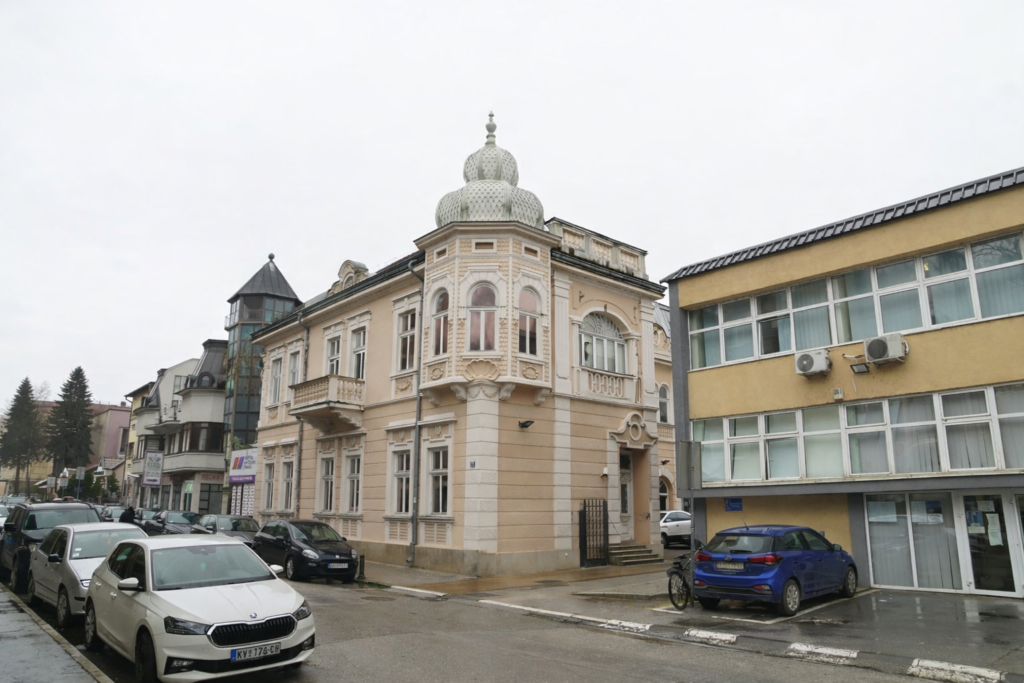
In the following decades, Bogavac’s house served as the headquarters of youth organizations and associations.
Over time, as these organizations dissolved, parts of Bogavac’s endowment were leased to private enterprises. In 1997 a decision was made to remove the house of Petar Bogavac from the ownership of the Municipality of Kraljevo and assign it to the Secretariat of the Ministry of Internal Affairs. Today, Bogavac’s house houses the Kraljevo office of the Security‑Information Agency. In 2005 the City of Kraljevo decided to establish the Petar Bogavac – Anđelko Savić Foundation, which provided scholarships each year for underprivileged students, but it was dissolved in 2018.
Milena Baltić
Editor of the Education and Scientific Program
of the Official Internet Presentation of the National Museum Kraljevo