
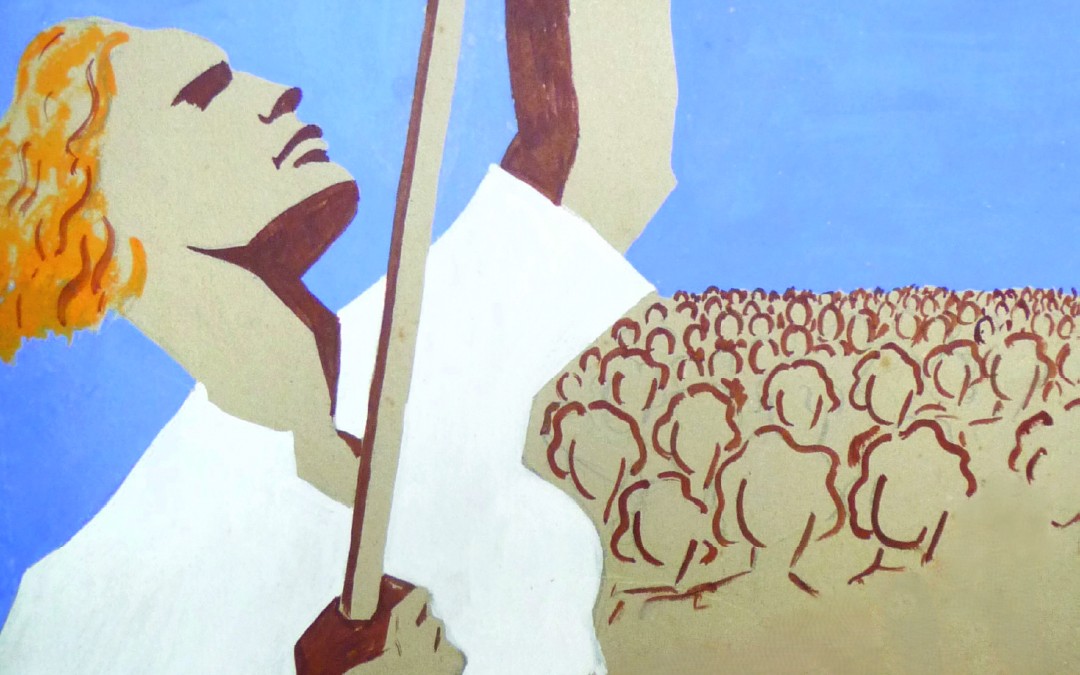
On this day, March 8th, 2026, International Women’s Day is celebrated. The initiative for marking this holiday was presented by Clara Zetkin at the Second International Conference of Socialist Women, held in Copenhagen in 1910. However, she did not have March 8th or any specific date in mind. The first event that can be connected to this date, and which concerns the struggle for women’s rights, took place in the United States in 1857. On March 8th of that year, women employed in a textile factory in New York went on strike, demanding higher wages and better working conditions. However, the connection between this event and the later choice of March 8th as the date for celebrating International Women’s Day is not entirely certain.
The further struggle for women’s rights continued in the years after the founding of Second International in 1889. In New York in 1908, American women members of the socialist movement organized new demonstrations, demanding the right to vote, shorter working hours, and better working conditions. These demonstrations, attended by more than 15,000 women, were also the first major demonstrations in the women’s fight for equality in the United States. That same year, on May 3rd, Chicago became the first American city to mark Women’s Day. A year later, the Socialist Party of America decided to celebrate National Women’s Day, which was observed on February 28th.
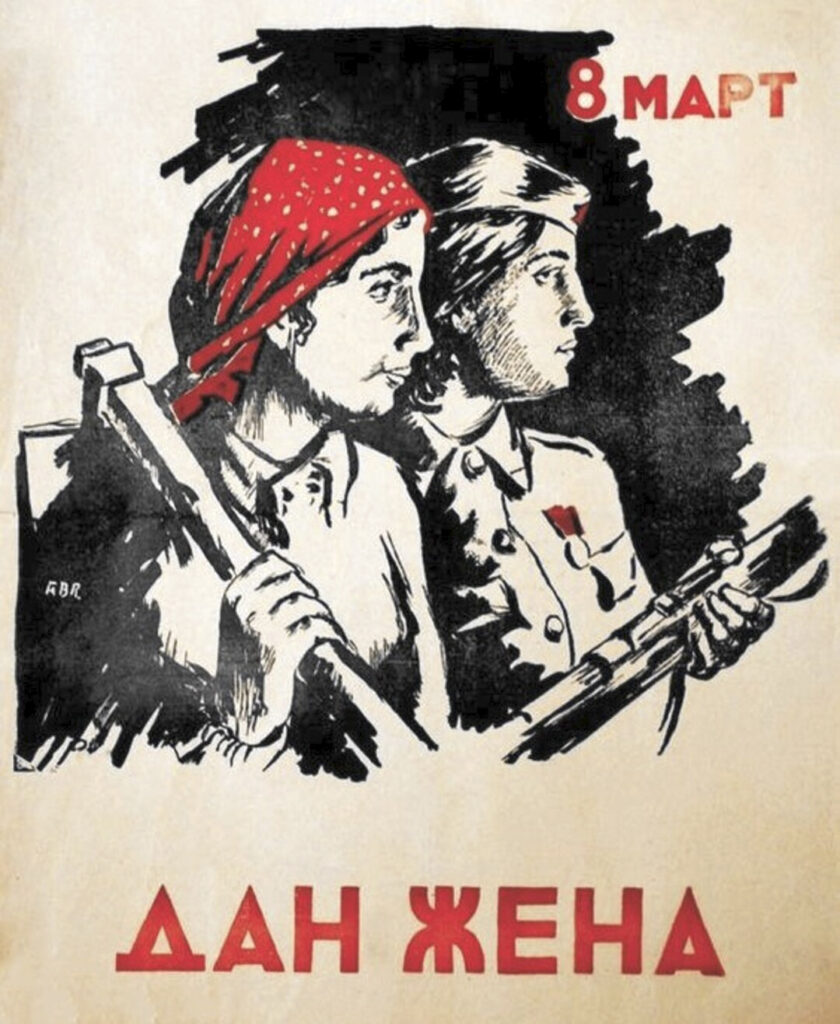
After Clara Zetkin’s proposal was accepted in Copenhagen, the celebration of Women’s Day as an international holiday began. For the first time, this holiday was marked on March 19th, 1911. Demonstrations were held across the European continent, and in Austria‑Hungary alone more than 300 such events were recorded. In the following years, the holiday was not yet fully connected with its present date but was celebrated on different days in different countries.
In Russia, International Women’s Day was first celebrated in 1913. Events in this country finally determined March 8 as the date of its observance. On that day in 1917, female textile workers in Petrograd began a protest that later spread throughout the city. This was the beginning of the February Revolution (at that time Russia still used the Julian calendar, according to which the protest began on February 23rd), which ultimately resulted in the abdication of Tsar Nicholas II. Thanks to Alexandra Kollontai, March 8 became an official holiday in the Soviet Union. At the Second International Congress of Communist Women, held in 1921, the Bulgarian delegation proposed that International Women’s Day be celebrated everywhere on the same date, namely March 8, as a sign of remembrance of the strike of Petrograd’s female workers. More than half a century later, in 1977, the United Nations decided to recognize International Women’s Day as an official holiday, although it had been marked for the first time two years earlier.
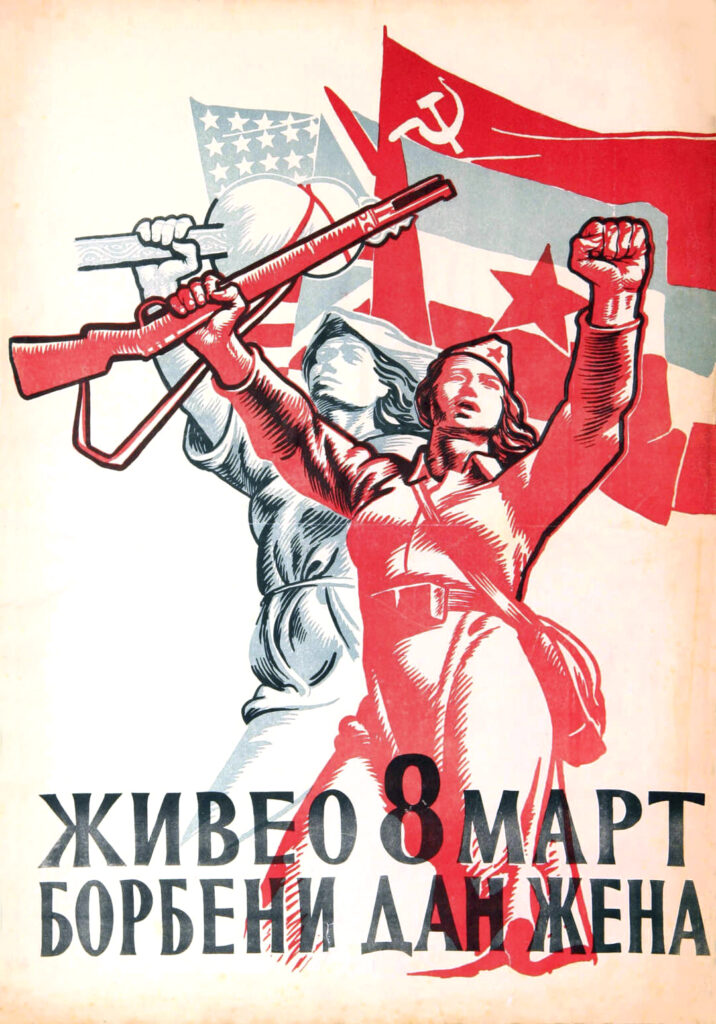
In Serbia, members of the social democratic movement celebrated International Women’s Day as early as 1911, and three years later the first celebration of this day was organized in the National Home in Belgrade. Although the holiday was not officially celebrated before the Second World War, women in the Kingdom of Yugoslavia strongly advocated for their emancipation. In 1919, the Society for the Education of Women and the Protection of Their Rights was founded. Between 1920 and 1938, this society published the journal “Women’s Movement,” considered the first feminist journal in Yugoslavia. Women’s emancipation was also addressed by the journal “Woman and the World”, published between 1925 and 1941. In addition, from 1936 the journal “Woman Today” was published, influenced by the Communist Party of Yugoslavia, then operating illegally. This journal, besides promoting feminism, also promoted anti‑fascism and communism, and was banned in 1940. It was revived during the Second World War and continued to be published until 1981.
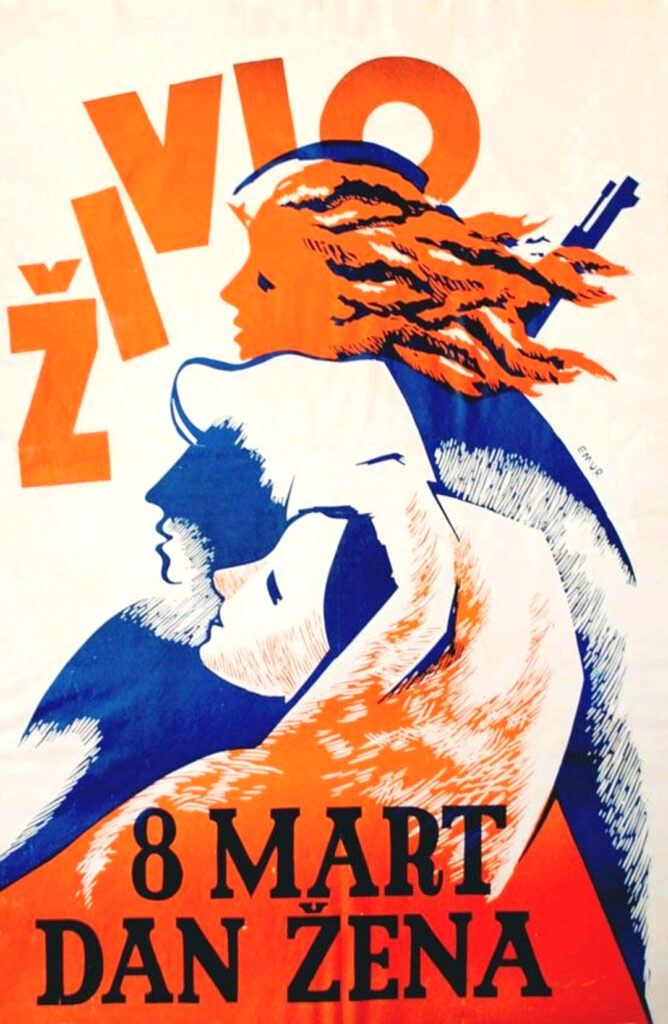
The struggle for women’s rights did not bypass the women of Kraljevo. They formed several women’s organizations, the oldest of which was the Kraljevo Women’s Branch, created as an extension of the Belgrade Women’s Society. To improve the position of women, the Kraljevo Women’s Branch also oversaw the work of the Women’s Workers’ School, later the Women’s Vocational School, whose students, in addition to general education subjects, studied skills such as embroidery and sewing, acquiring knowledge that enabled them to improve their economic situation. In December 1939, 27 members of the Kraljevo Women’s Branch signed the “Appeal of the Belgrade Women’s Movement” for women’s right to vote. Women achieved this right after the Second World War. At that time, the practice of regularly celebrating International Women’s Day every March 8th began, and it has continued to this day.
Milena Baltić
Editor of the Educational and Scientific Program
Official Internet Presentation of the National Museum Kraljevo