
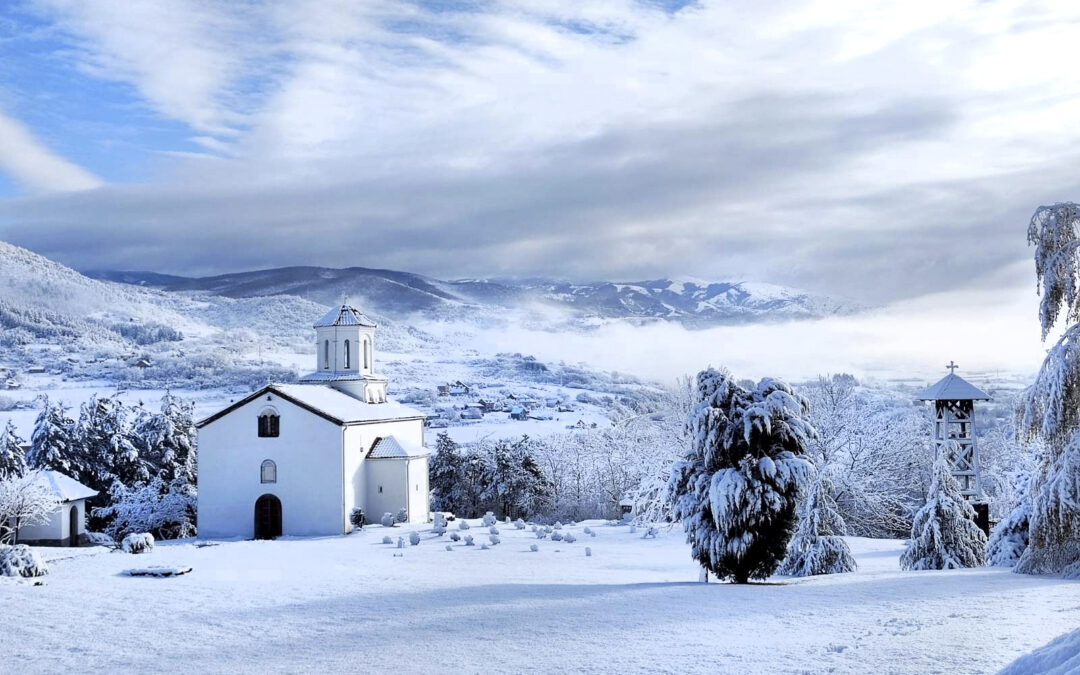
Just 3 kilometers from Raška, in the village of Gnjilica, lies the Končul Monastery, one of the oldest endowments of Grand Župan Stefan Nemanja. The name of the monastery comes from the word končina, meaning “end” or “conclusion.” As the monastery church is dedicated to Saint Nicholas, among the people it is also known as Nikoljča. It was first mentioned in the Studenica Typikon at the beginning of the 13th century. The Končul Monastery was built in the period preceding the rule of the Nemanjić dynasty, and Stefan Nemanja restored it around 1175. According to local tradition, the monastery was originally built in the nearby village of Kazinovići, where the foundations of an old church can still be seen today. Tradition claims that the monastery was attacked by robbers, so the monks prayed to God for help and protection. God answered their prayers and transferred the monastery to the other bank of the Ibar River.
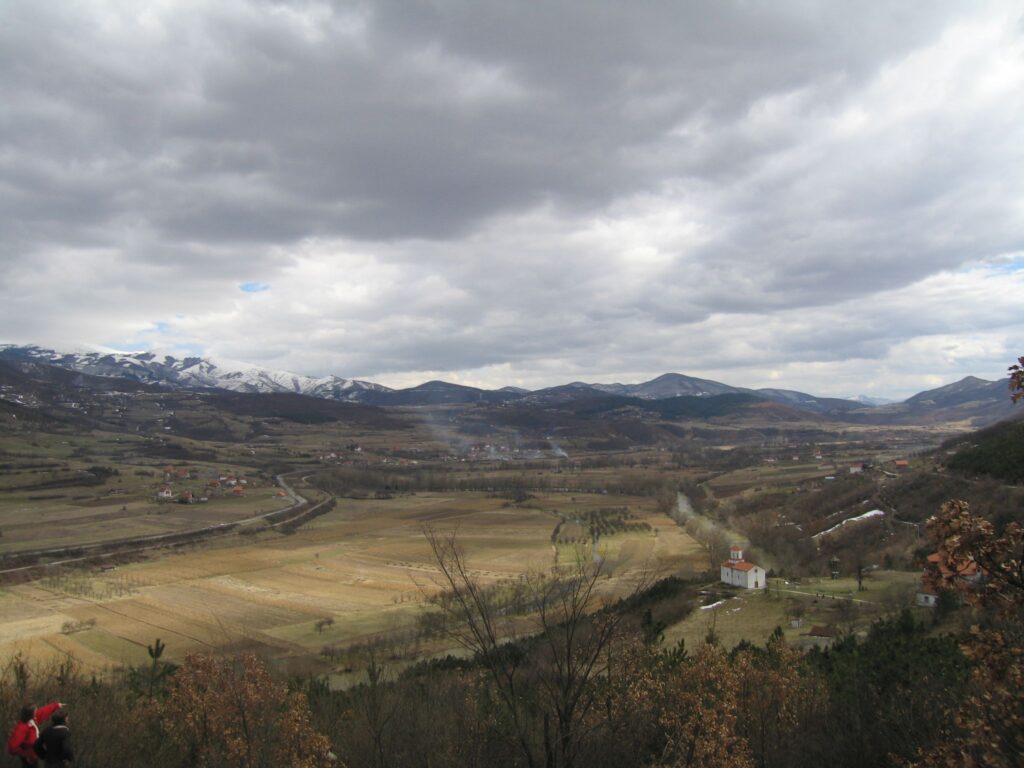
Throughout the Middle Ages, Končul was an important spiritual center. Already in the Studenica Typikon from the early 13th century, its abbot is listed fourth among the abbots who, together with the ruler and the bishop, participated in the election of the abbot of Studenica. In this monastery, the future archbishop Danilo II took monastic vows and spent some time. During the reign of King Milutin, Končul Monastery was the seat of the newly established Končul Diocese. The monastery had a school and a scriptorium. The last mention of the monastery in the Middle Ages dates from the reign of Despot Đurađ Branković, when it was probably the seat of a metropolitanate. From this period comes the largest number of tombstones discovered. In addition to men’s graves, women’s and children’s graves were also found, and burials in the necropolis next to the monastery continued until the early 20th century.
Monastic life at Končul continued even after the fall of the medieval Serbian state under Ottoman rule, as evidenced by smaller tombs discovered in the monastery complex. At some point, however, the monastery was destroyed and abandoned. Although the exact time is unknown, it is assumed to have happened in 1689, during the Austro‑Turkish War, when many sanctuaries in the region were devastated. According to legend, during the Great Migration of the Serbs in 1690, Patriarch Arsenije III Čarnojević spent three days in this monastery with the people. After they moved on, the monks decided to leave with them.
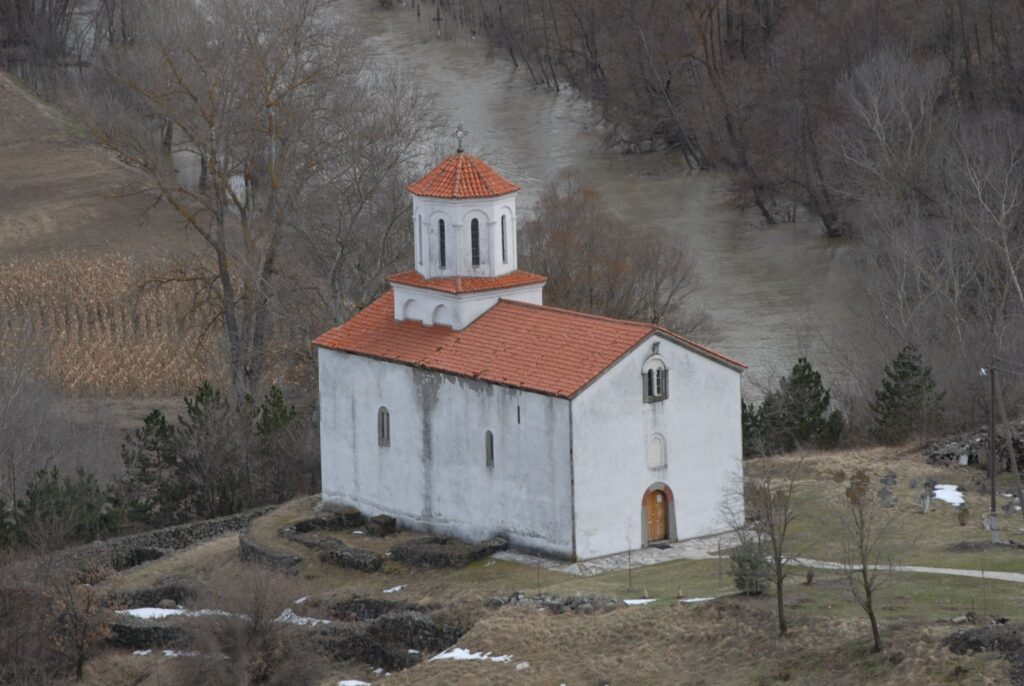
The present monastery church was built in 1861, as evidenced by a marble plaque above the entrance. However, the church was consecrated only in 1904, by the Raška‑Prizren Metropolitan, on the feast of the Nativity of the Virgin Mary (Mala Gospojina). Since then, it has served as a parish church. Archaeological research conducted in the late 1970s confirmed that the current church was indeed built on the foundations of an older medieval church and partly retained its layout. Remains of monastic quarters and other auxiliary buildings were also discovered. The medieval church was painted with frescoes, and remains of a necropolis older than the original church were found. The present church is a single‑nave building with a semicircular apse on the east side and a dome. On the south side of the nave there is a chapel, and research shows that a similar chapel existed on the north side in medieval times. Parts of medieval windows were incorporated into the windows of the current building, and a carved depiction of a lion was built into the top of the western façade. The interior differs significantly from the original, and the iconostasis is of more recent date.
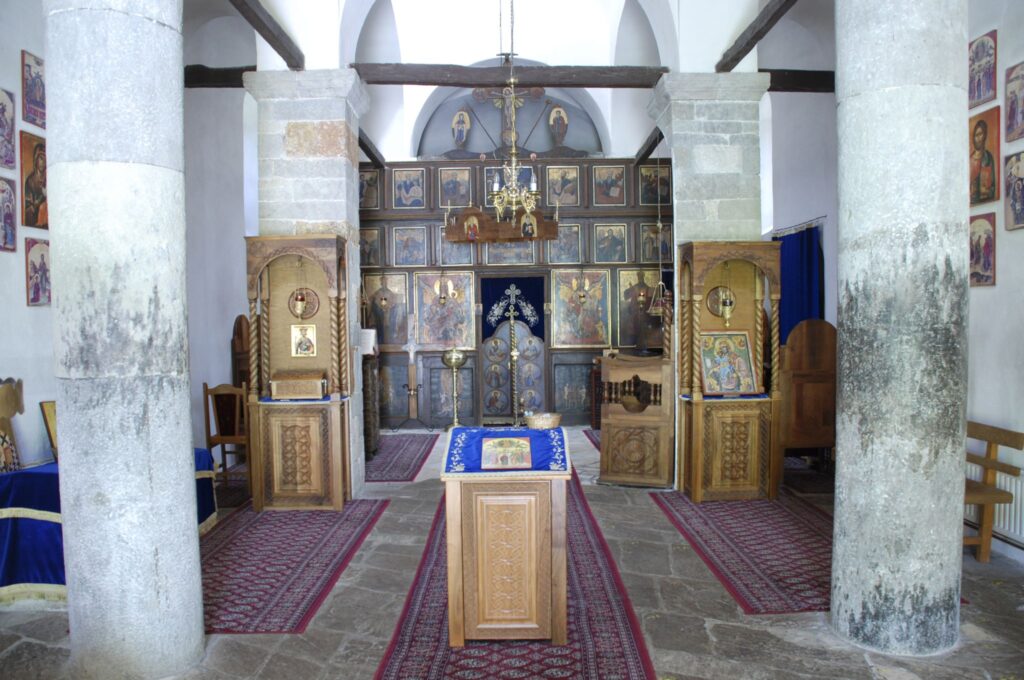
Inside the church are two memorial plaques from the time of World War II. One commemorates fallen fighters of the Yugoslav Army in the Homeland, members of the Nikoljča Company. The other honors priest Tihomir Popović, parish priest from 1935 to 1942, who was arrested by the Germans in November 1942 as a hostage, taken to Kosovska Mitrovica, and executed.
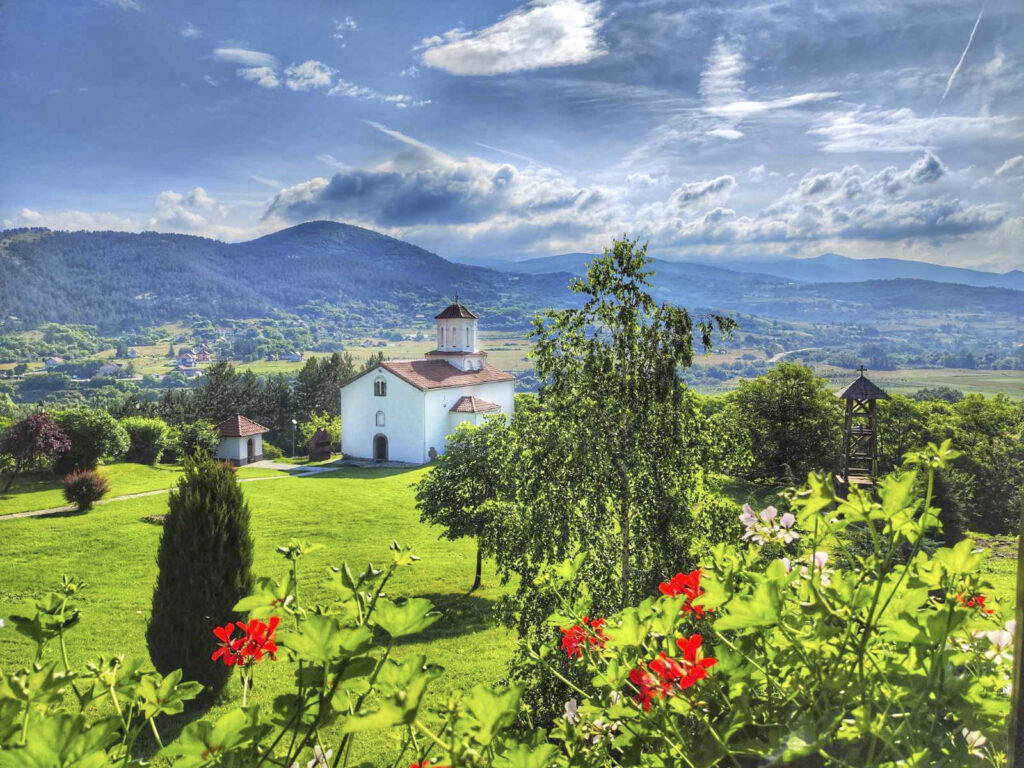
Monastic life was renewed in 2000. Abbess Katarina and the sisterhood of the Holy Trinity Monastery in Mušutište, Kosovo and Metohija, destroyed in 1999, received the blessing of Raška‑Prizren Metropolitan Artemije to restore Končul. At that time, only a small house existed in the complex beside the church. A new monastic residence was built in 2007. The monastery now has workshops for icon painting and sewing, and the nuns also create miniatures on parchment. The monastery preserves a copy of the miraculous icon of the Mother of God Kykotissa (the original is on Cyprus), which remained undamaged after the destruction of the Holy Trinity Monastery in 1999, as well as the relics of Saint Jacob the Persian, Great Martyr.
Milena Baltić
Editor of the Education and Scientific Program
of the Official Internet Presentation of the National Museum Kraljevo