
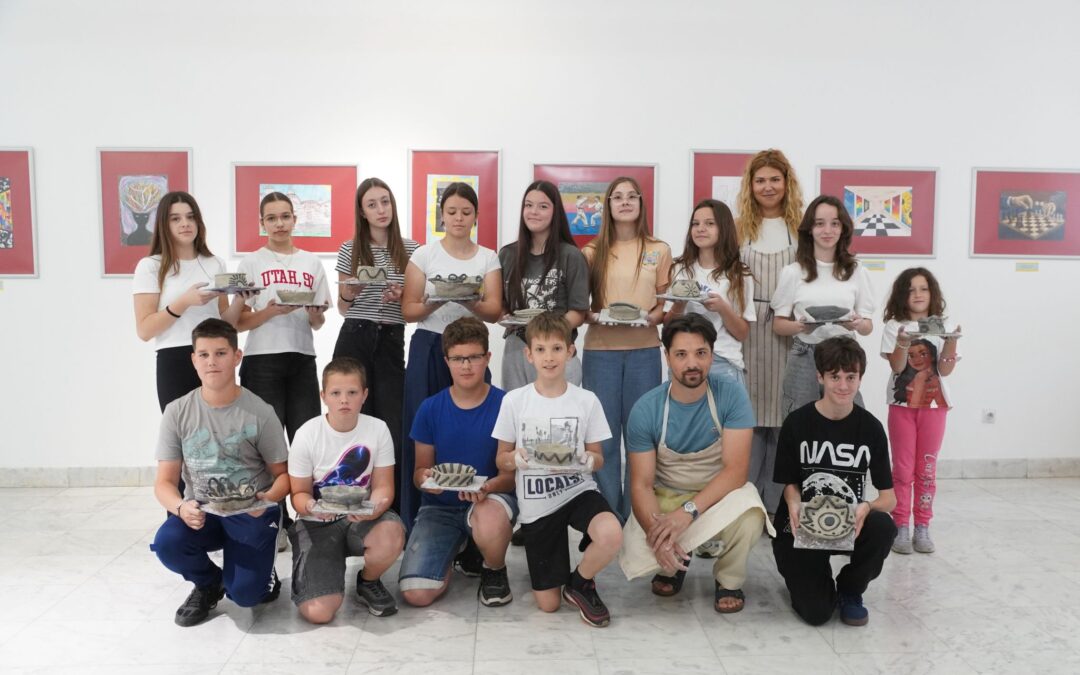
As a special award for students whose works were recognized at the competition of the 51st Children’s May Art Salon, a pottery workshop of the Ceramic Studio “Art F4” was held at the Gallery of the National Museum Kraljevo, on Tuesday, June 2nd, 2026, starting at 10:30 a.m. The workshop was organized by members of the expert Јury, academic artists Milica Gračanac and Zlatan Gračanac. At the beginning of the workshop, participants were introduced to pottery from the Neolithic, Bronze Age, and Antiquity, which is part of the archaeological collection of the National Museum Kraljevo.
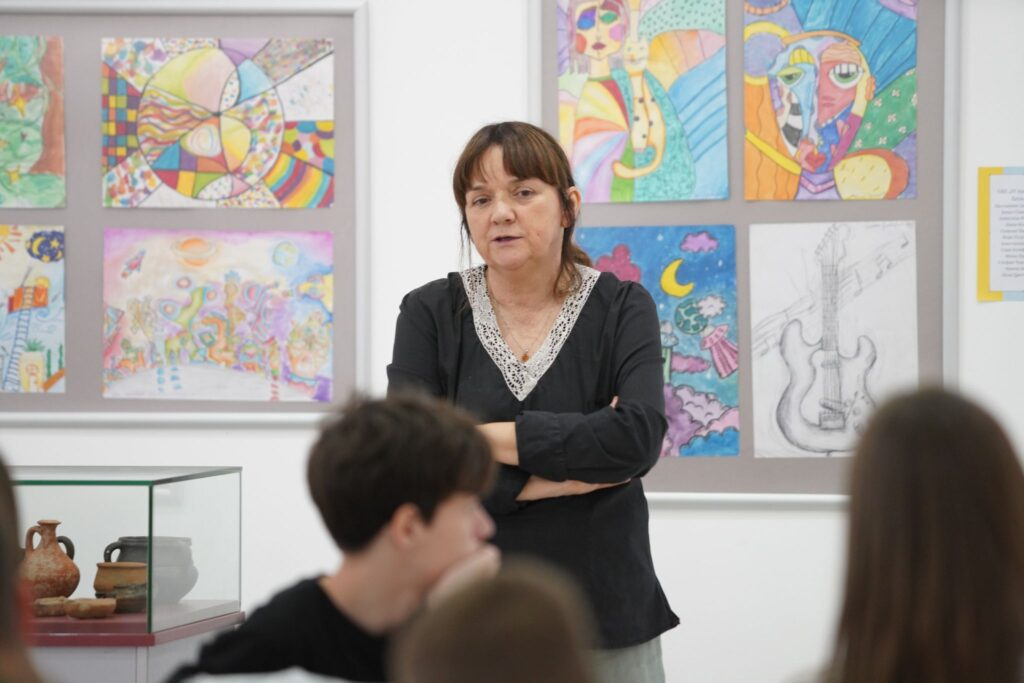
Archaeologist Tatjana Mihailović, PhD, museum advisor of the National Museum Kraljevo, presented the origins and development of ceramics through different epochs of human history. She explained that the appearance of ceramics was one of the most important achievements of the Neolithic, the period when humans transitioned from hunting and gathering to agriculture and animal husbandry. New ways of preparing and storing food emerged, creating the need for vessels that could withstand cooking and daily use.
She emphasized that ceramics, thanks to firing at high temperatures, is a very durable material, making it one of the most important sources for studying the past. In addition to vessels for preparing and serving food, ceramics were used to make various everyday objects, decorative items, lamps, and children’s toys. Archaeological finds from the site Divlje Polje near Kraljevo, located close to the confluence of the Ibar and the West Morava, were presented.
Archaeological findings from the site of Divlje Polje near Kraljevo, located near the confluence of the Ibar and West Morava, were also presented. Participants had the opportunity to see various types of ceramic objects: bowls, cups, vessels with animal depictions, fragments with depictions of human figures, as well as figurines that were often found without heads, as they were the most fragile part of the object. A model of a small table with miniature vessels, which is assumed to have served as a children’s toy, attracted particular attention.
Tatjana Mihailović then presented ceramic objects from the Bronze Age, Ancient Greece, and the Roman period, pointing out the development of techniques of production, decoration, and glazing. She explained the purpose of certain vessels and ceramic lamps used for lighting, as well as the fact that ceramics for centuries were more accessible and cheaper than metal, which gave them a significant role in everyday life. The lecture concluded with the reminder that ceramics have accompanied humans from prehistory to the present day. Although technologies have changed, its basic function has remained the same – to serve everyday needs – making it one of the most enduring and significant materials in the history of human civilization.
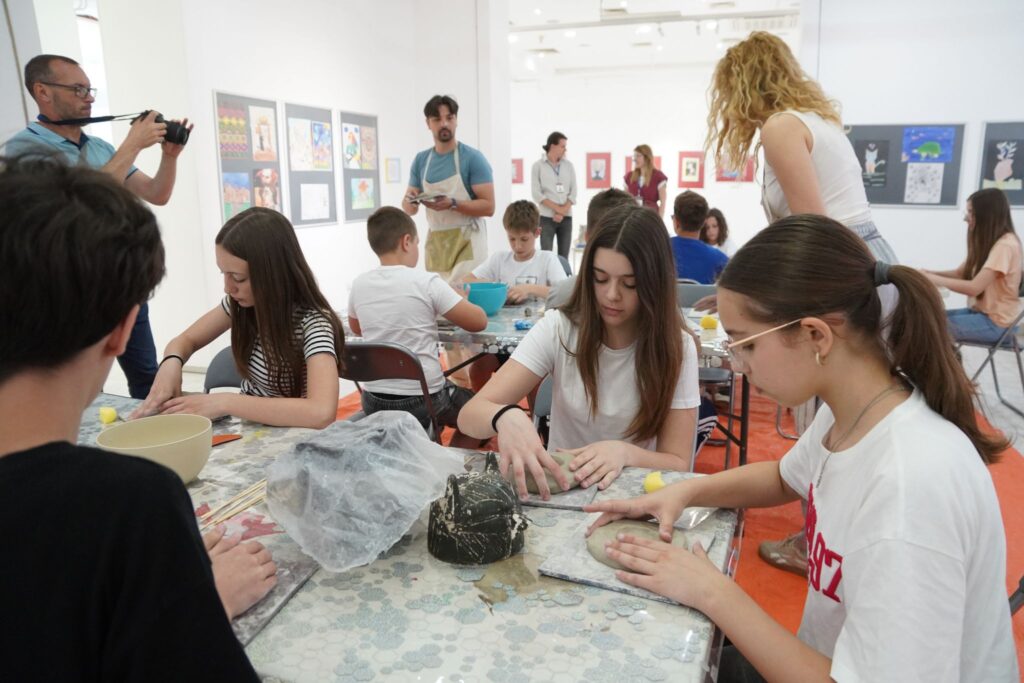
Inspired by museum exhibits, pupils in the practical part of the workshop shaped clay objects using hand techniques and simple tools made of natural materials such as stone and wood. Through creative work, they explored the skills of the first potters, developed creativity and fine motor skills, and gained new knowledge about cultural heritage.
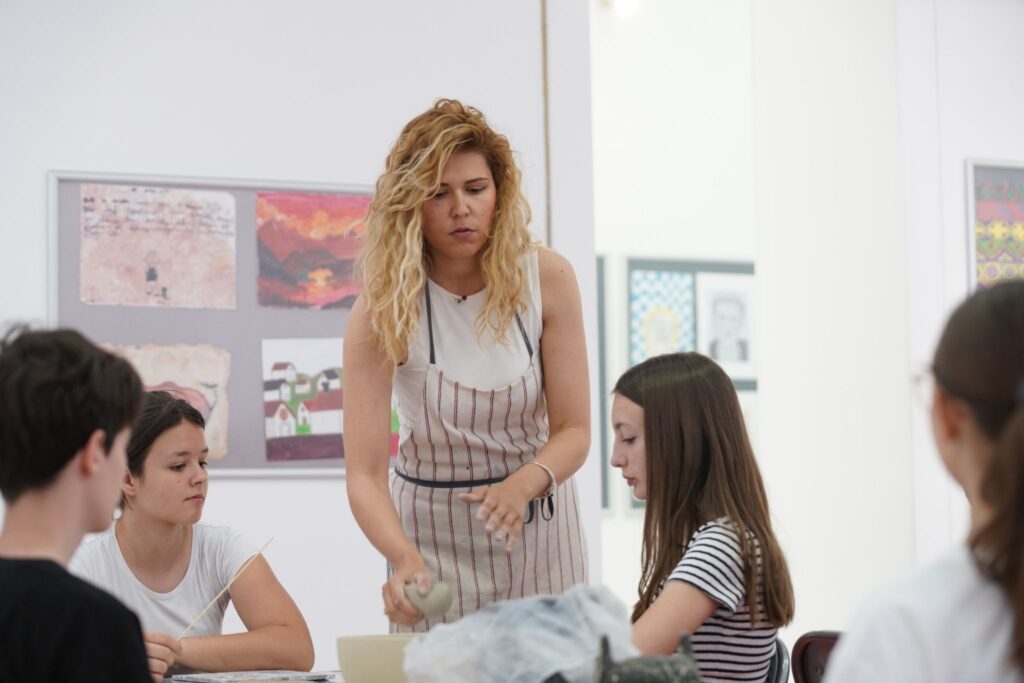
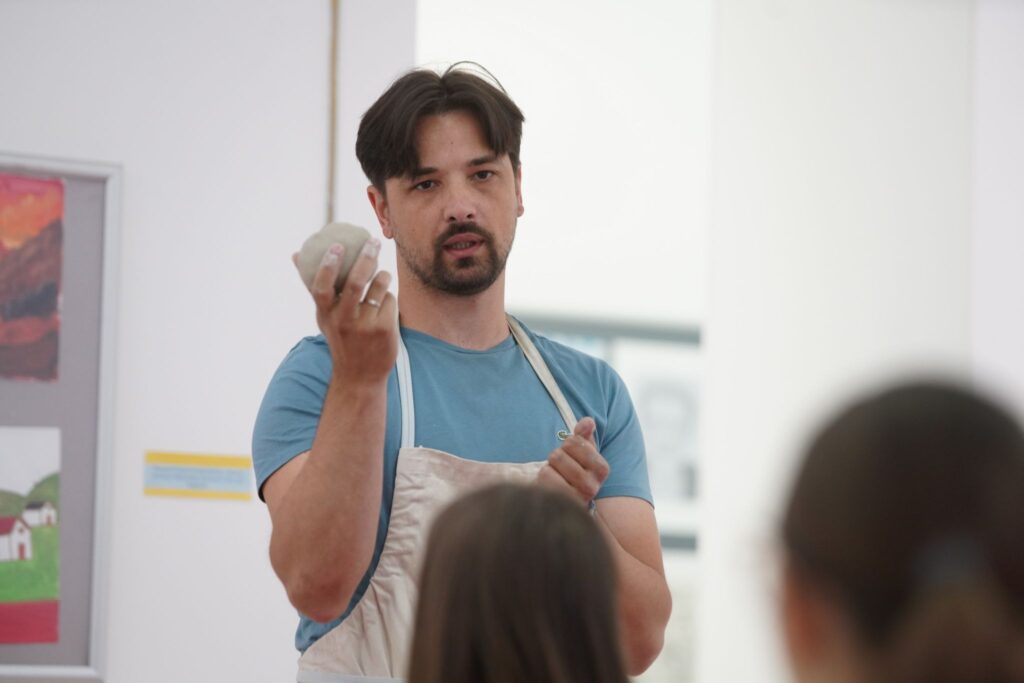
Following the instructions of academic artists Milica and Zlatan Gračanac, pupils first shaped pieces of white clay, creating the form of a bowl, as our prehistoric ancestors once did. They were then introduced to one of the decoration techniques using black clay, specifically for its pigment content. Participants made clay rolls in the shape of “worms,” with which they decorated their objects by gently pressing them according to their own ideas.
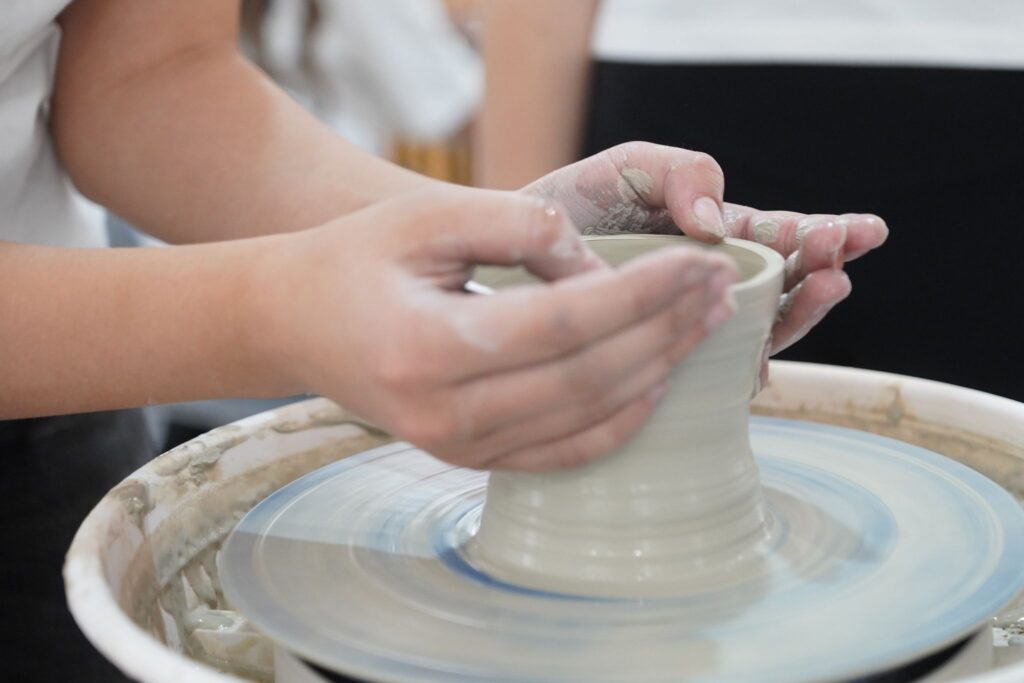
At the end of the workshop, pupils were introduced to the appearance and operation of the potter’s wheel, basic methods of placing clay on the wheel, centering, and the skills needed to make a vessel from a piece of clay. Each child had the opportunity to try modeling clay on the wheel, which was the most exciting part of the workshop for the participants.
Under the leadership of academic artists Milica and Zlatan Gračanac from the Ceramic Studio “Art F4” , the workshop combined museum learning and contemporary ceramic practice, providing young artists with the opportunity to revive traces of the past in their own way through work, research, and imagination.
Anđelija Petrović
Editor of the Informative Program
of the Official Internet Presentation of the National Museum Kraljevo