
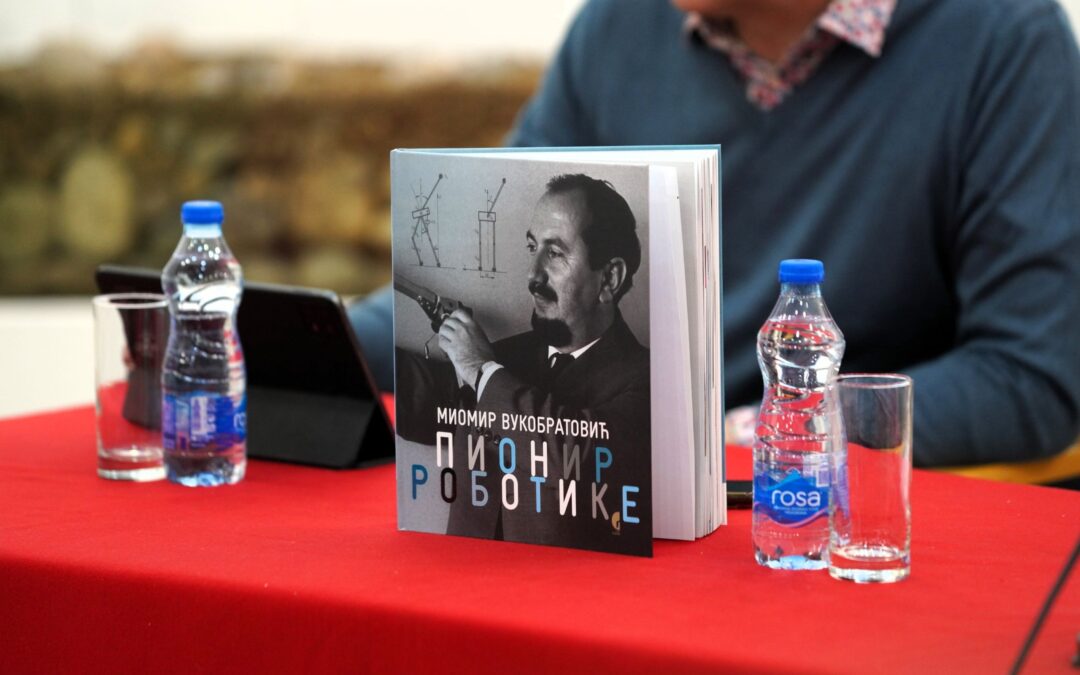
The promotion of the monograph “Miomir Vukobratović: Pioneer of Robotics” was held at the Gallery of the National Museum Kraljevo, on Friday, April 3, 2026, starting at 1 PM. Mirjana Savić, museum advisor of the National Museum Kraljevo, greeted the audience and introduced the participants of the promotion: Ivan Stanić, senior curator of the Museum of Science and Technology, who prepared the publication, Aleksandar Rodić, PhD, scientific advisor at the Institute “Mihajlo Pupin” in Belgrade, Gordana Petković Srzentić, editor of the monograph at the publishing house “Official Gazette”, and Marina Vukobratović Karan, daughter of Miomir Vukobratović.
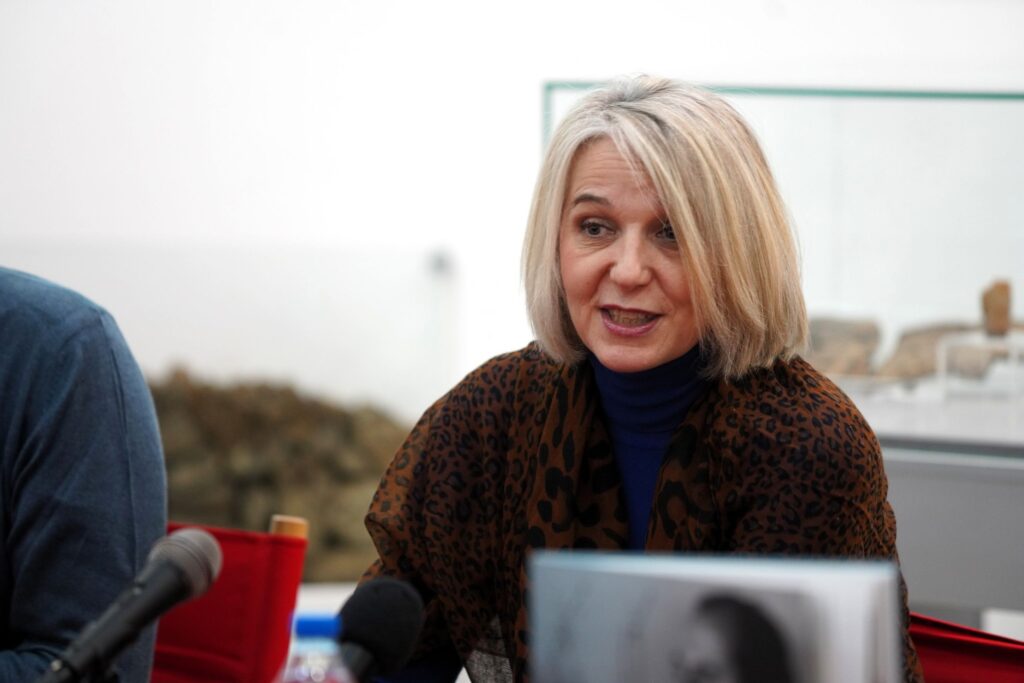
The audience was first addressed by Gordana Petković Srzentić, editor of the monograph, who emphasized that she was glad to see young people in the audience. She noted that the project originated from Ivan Stanić, while Marina Vukobratović Karan collected extensive material from family sources. The monograph is dedicated to Professor Miomir Vukobratović, one of the versatile personalities who, besides science – robotics, was also devoted to sports, music, and especially family. All these aspects of his life are documented through the extensive book.
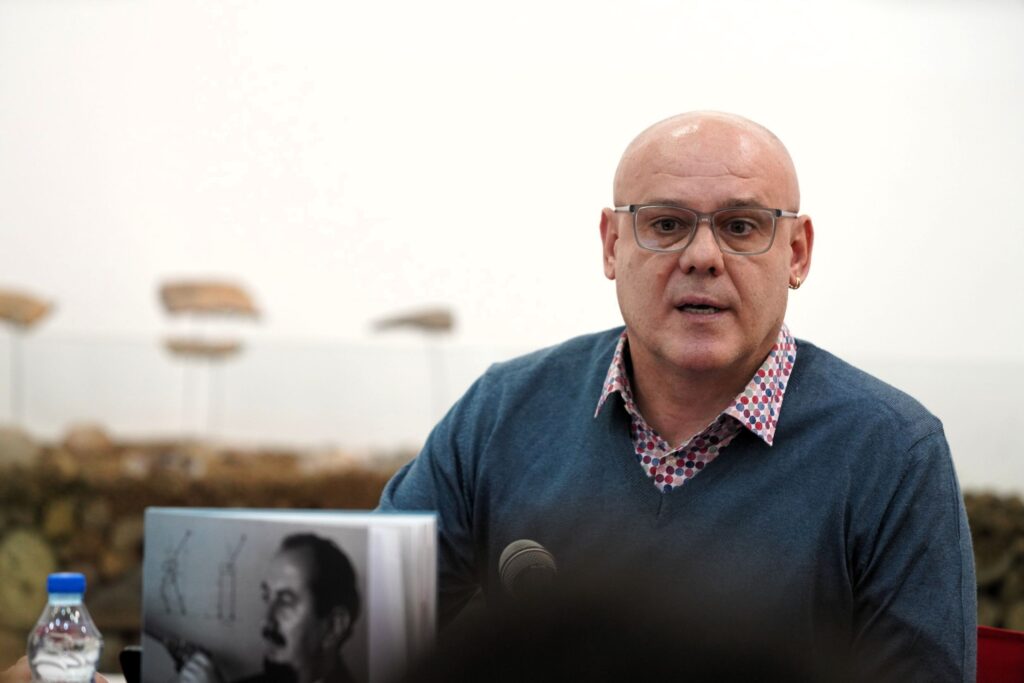
Ivan Stanić, the compiler of the monograph, in his address pointed out that as curator of the Robotics Collection, he came up with the idea of a monograph about the pioneer in this field, which imposed itself naturally.
There is a strong connection with Kraljevo, since his mother was from this city. He was not born in Kraljevo, but the family returned in 1934 to his mother’s hometown, where he completed elementary and secondary school. He enrolled in the Aeronautics Department at the Faculty of Mechanical Engineering in Belgrade in 1950. Vukobratović was not a pioneer on the national, but on the world level. The Belgrade Hand from 1950, which he constructed, represents the first robotic hand in the world, and today is kept in the Museum of Science and Technology. He also founded the Laboratory for Robotics at the “Mihajlo Pupin” Institute in Belgrade, which he directed for many years. He invented the “Zero Moment Point” and bipedal walking of robotic organisms, on which all machines of this type function today.
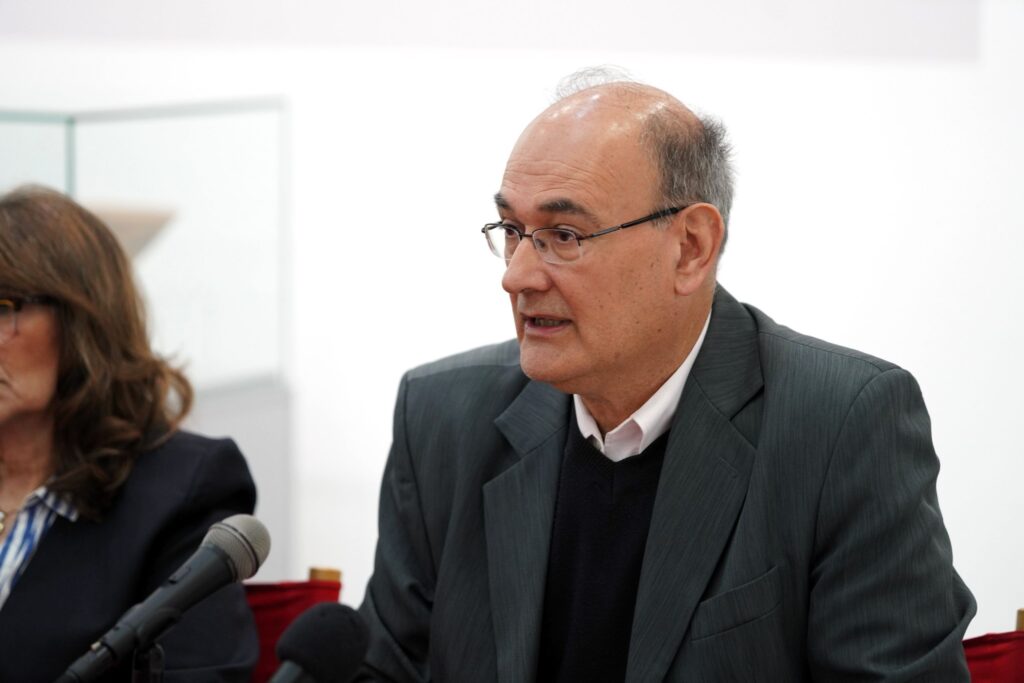
Aleksandar Rodić, PhD, spoke on behalf of the “Mihajlo Pupin” Institute, where in the Laboratory for Robotics he succeeded Miomir Vukobratović in the leading position, which for him was a great responsibility and obligation. Vukobratović was a world name, belonging to the top of world science, while at the Yugoslav level he was mentor to numerous engineers from across the country. Thanks to him, the concept of the Belgrade school of robotics was created, and today the fifth generation of roboticists is already emerging. The “Zero Moment Point” – stable bipedal walking, the model by which all existing robots walk, was a great discovery of this scientist. The Belgrade Hand, realized in the Laboratory for Bioprosthetic, was also made for NASA, since today’s most advanced robot grippers are not much different from this first model. Bipedal walkers – exoskeletons are the starting point for humanoid robots. Vukobratović’s books were translated into Russian, Chinese, and Japanese. Today, unfortunately, we are losing ground 5:0 to modern robotics, especially Chinese science. The collection from the Laboratory at the “Mihajlo Pupin” Institute was taken over by the Museum of Science and Technology and can now be seen in the permanent exhibition of this museum.
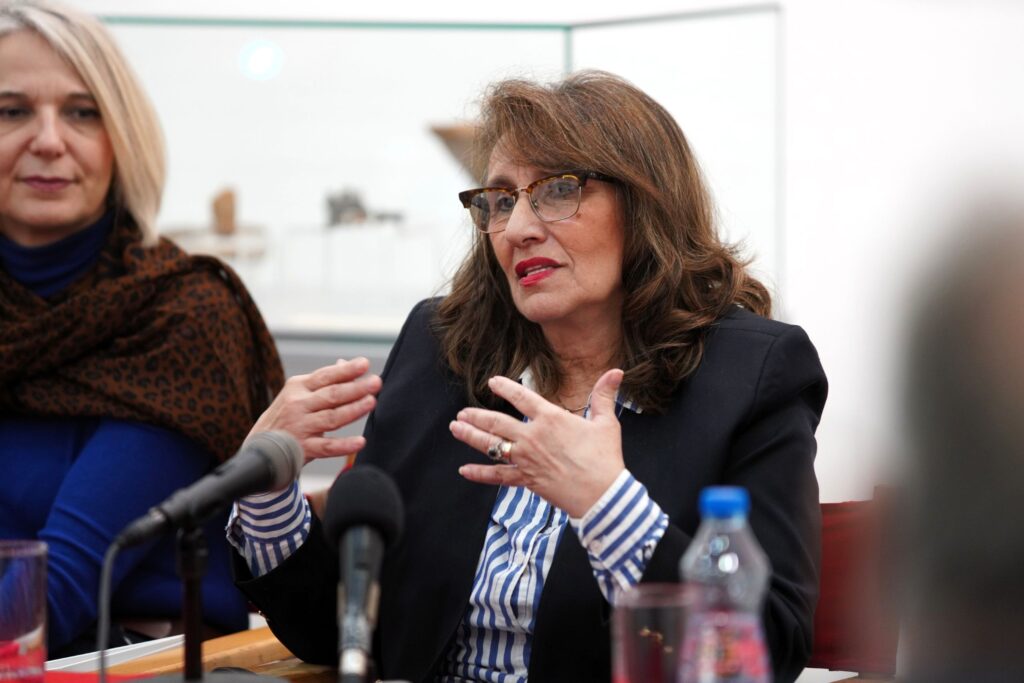
At the end of the promotion, the audience was addressed by Marina Vukobratović Karan, the scientist’s daughter, who thanked everyone who made the effort to publish the book. She especially emphasized that Kraljevo was for her a second city, alongside Belgrade, which she experienced as her home and where she spent every vacation. She shared a series of memories related to her father. One curiosity was that he did not like airplanes as a means of transport, despite being an engineer who worked with them. He had two unpleasant flights during his life, which further reinforced this feeling. When he traveled to America, he went by ship from Genoa, and on the continent, he traveled at night by bus from city to city. He was a wonderful and devoted father and husband, who loved to play the violin while she accompanied him on the piano. He had a large number of collaborators, especially young ones, whom he encouraged to pursue science. He was a man of the world who felt at home everywhere.
At the close of the promotion, editor Gordana Petković Srzentić thanked everyone for their participation and the program and invited the young people in the audience to read the book and get to know one of the greatest scientists of the postwar period in Serbia.
Tatjana Mihailović, PhD
Editor-in-Chief of the Official Internet Presentation
of the National Museum Kraljevo