

The vine has been cultivated in the area of today’s Serbia for thousands of years. Fossil remains of grape seeds have been found on the bank of the Danube near Grocka, in Vinča, and at other sites. The first to cultivate the vine on a larger scale were the Thracians, who began to do so in the valley of the Maritsa River about 5000 years ago. Thracian wine was very famous, as evidenced by its mention in Homer’s works. In pre‑Roman times, the vine in the territory of Serbia was cultivated by the Triballi, who lived between the Danube and the lower course of the South Morava.
With the arrival of the Romans, important changes occurred, and techniques of vine cultivation and wine production advanced. However, Emperor Domitian (81–96 CE) banned vine cultivation outside Italy, because he wanted to protect wine producers on this peninsula, who faced great competition from provincial wines. This ban remained in force until the reign of Emperor Probus (276–282). He ordered legionaries to restore vineyards and cultivate vines. Vineyards were renewed in the area of Srem (where Emperor Probus was born), Fruška Gora, and the area east of Singidunum (today’s Belgrade). Finds of carbonized grape seeds at Srem sites show that vines were cultivated even before the reign of this emperor.
The Great Migration of Peoples and the crisis of Roman authority led to an almost complete interruption of grape cultivation in some areas. Yet, during the Middle Ages, wine in the Eastern Roman Empire or Byzantium played a very important role in economy and religion, and from the 10th century there was improvement in grape and wine production. More varieties were cultivated and more types of wine produced, which led to increased trade. It is certain that techniques of vine cultivation and wine production used in Byzantium were also applied in medieval Serbia.
По насељавању на Балкан Срби су од локалног становништва научили како да производе вино. Обнова виноградарства је започела у осмом веку, пре свега у приморским крајевима и у Македонији, где производња вина вероватно никада није замрла у потпуности. Привредни успон средњовековне Србије током владавине династије Немањић довео је до правог процвата виноградарства. Винова лоза се узгајала на метосима, имањима која су припадала манастирима. Стефан Немања је својој задужбини у Студеници даровао околна виноградарска села. Манастиру Хиландар је поклонио винограде у селу Велика Хоча на подручју Метохије, који су били надалеко чувени. Такође, вино се производило и на имањима племства, на чијим се гозбама и служило. Стефан Немања је вином послужио цара Фридриха Барбаросу приликом њиховог сусрета у Нишу 1189. Year.
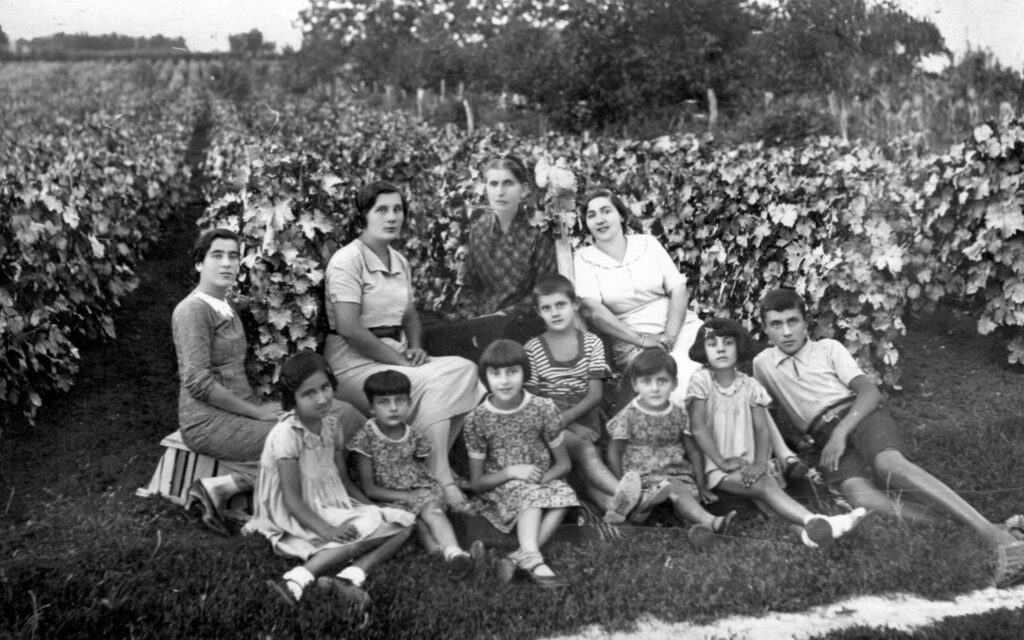
During the reign of Emperor Dušan, the quality of wine was protected by law, which forbade mixing it with water. To protect wine production on noble estates, penalties were introduced to limit production on peasant estates. Some grape varieties known mainly on the coast began to be cultivated inland. During the reigns of Prince Lazar and his son Despot Stefan, viticulture began to develop in Župa and the Morava region, as well as in Šumadija. Thanks to the special attention medieval rulers gave to viticulture, wine regions began to form that remain recognizable today.
In the Middle Ages, vineyards were usually fenced. Vines were planted in rows, with spacing of 2 to 3 meters, to allow easier plowing. Sheep or goat manure was used to improve yield. To prevent excessive growth, vines were pinched, that is, their tops were cut or broken. After harvest, wine was stored in barrels or large clay vessels, placed in cellars.
The Ottoman conquest of the Balkans had negative consequences for wine production. Yet it did not completely die out, and old grape varieties were preserved. In the 18th century, several types of wine were produced around Belgrade and Smederevo. Serbs migrating north of the Sava and Danube carried old grape varieties and wine‑making knowledge, leading to a new wave of viticulture in the southern parts of the Habsburg Monarchy, especially in Srem. Zaharije Orfelin, in his Experienced Cellarman, praised monastic and Karlovac wines.
In the 19th century, with gradual liberation from Ottoman rule, viticulture began to develop again south of the Sava and Danube. Vineyard areas expanded rapidly. The largest vineyards were planted in Smederevo, Župa, and Negotin Krajina, while households across Serbia had smaller vineyards. Few made viticulture their main activity. Usually, little attention was paid to variety selection. Vineyards were grouped in the most suitable places, overseen by a common guard. Exceptions were the largest vineyards, whose wines were especially high quality due to careful variety choice.
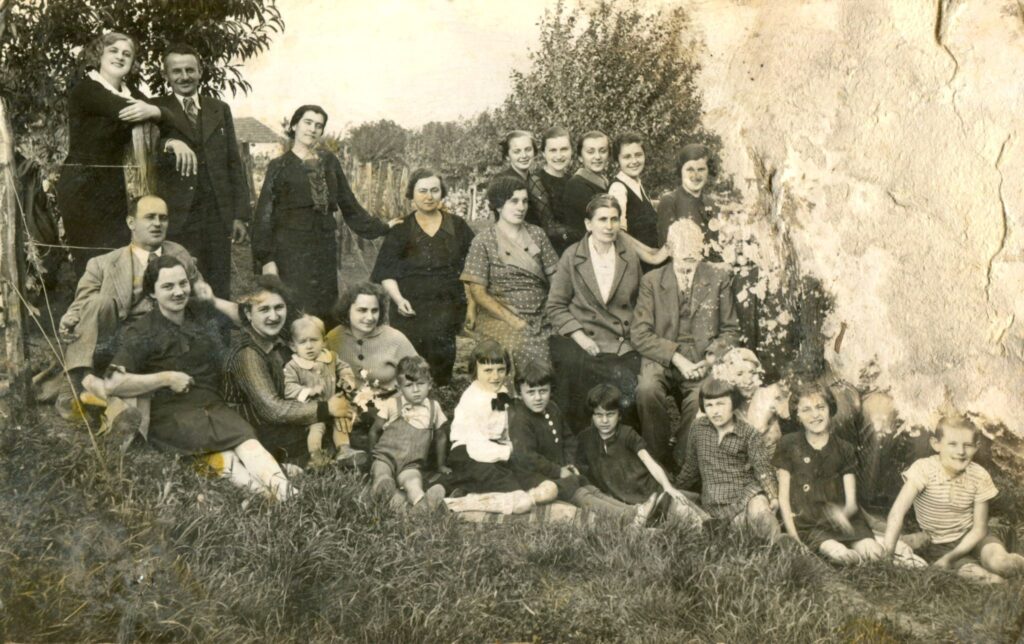
In 1882, Serbian wines were presented to Europe at the Bordeaux wine exhibition. Ljubomir Novaković of Kraljevo participated and won a silver medal, which he also won three years later in Antwerp. He was president of the Serbian Agricultural Society, director of the Agricultural School, and acting head of the Viticulture and Fruit‑growing School in Bukovo near Negotin. Serbian wines attracted great attention in Europe, especially since European wine production was devastated by phylloxera. By the late 19th century, Serbian wines were exported to France, Switzerland, Germany, Russia, Romania, and neighboring Austria‑Hungary, where they were served at court. Wine was poured directly from barrels, which remained common practice until World War II.
Unfortunately, phylloxera began to spread in Serbian vineyards in the late 19th century. This insect, native to the Mississippi Valley, feeds on vine leaves and roots. From 1882, when it was first recorded in Serbia, until 1897, it nearly destroyed wine production. Many varieties died out. Recovery was slow, beginning with grafting European varieties onto American ones, which proved more resistant.
In the first half of the 20th century, Serbian viticulture recovered, again supported by rulers. The Karađorđević dynasty built a winery and vineyards at Oplenac, which became one of the largest in the Balkans. Many medieval methods persisted: vines planted in rows with spacing, soil piled over buds in autumn to prevent freezing, pruned in spring for better fruit. The main protection against disease was Bordeaux mixture, copper‑based fungicide. Harvest was a communal event requiring many hands. After pressing grapes for wine, rakija komovica was made from pomace.
The rise of viticulture is also shown by the vineyard of the Stefanović family. Merchant Radoslav Stefanović of Čačak and his wife Grozdana from Kraljevo bought a 10‑hectare estate in Ljubić in 1925, planting 50,000 vines. After Radoslav’s death in 1933, Grozdana passed a professional exam and continued managing the vineyard. Under her leadership, it grew to 75,000 vines, worked by over 100 laborers. Reviving this rich tradition is one of the paths of today’s Serbian wine production.
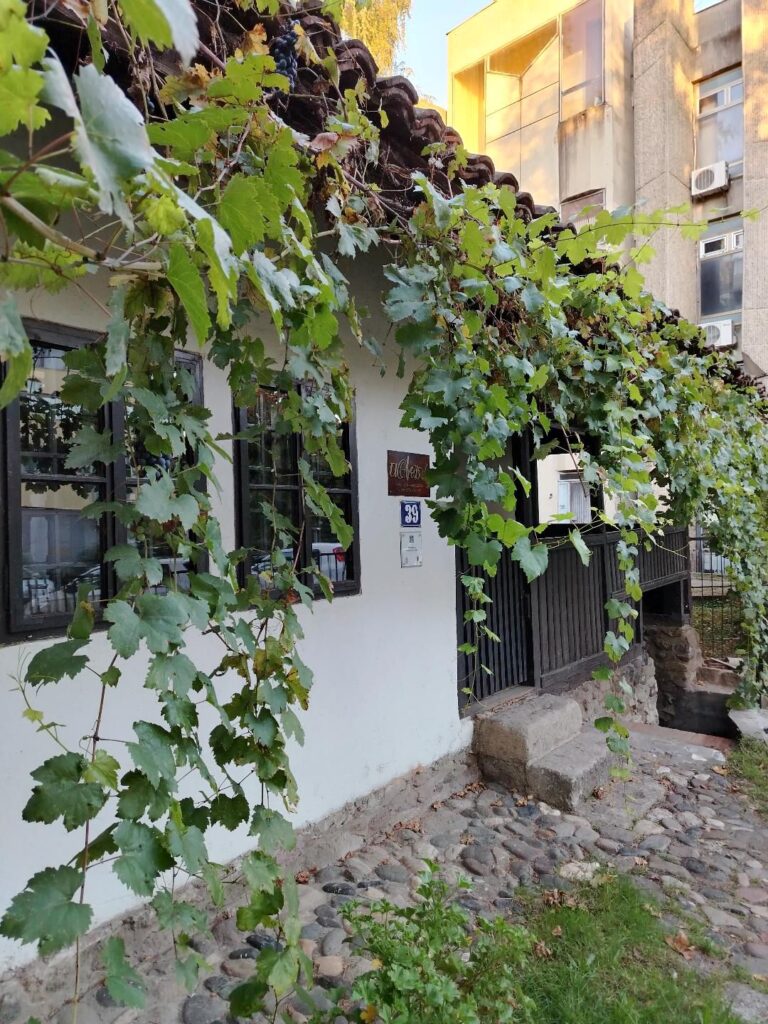
Finally, it should be mentioned that in Kraljevo grows a descendant of the oldest vine, entered in the Guinness Book of Records in 2004. In Maribor, Slovenia, grows the Old Vine, estimated at more than four centuries old. In 2009, as a twin city of Kraljevo, Maribor gifted a cutting of the Old Vine to our city. It was planted in the yard
of the Adžić House in the city center, where it grows and thrives today, symbolizing the friendship of the two cities.
Milena Baltić
Editor of the Education and Scientific Program
of the Official Internet Presentation of the National Museum Kraljevo